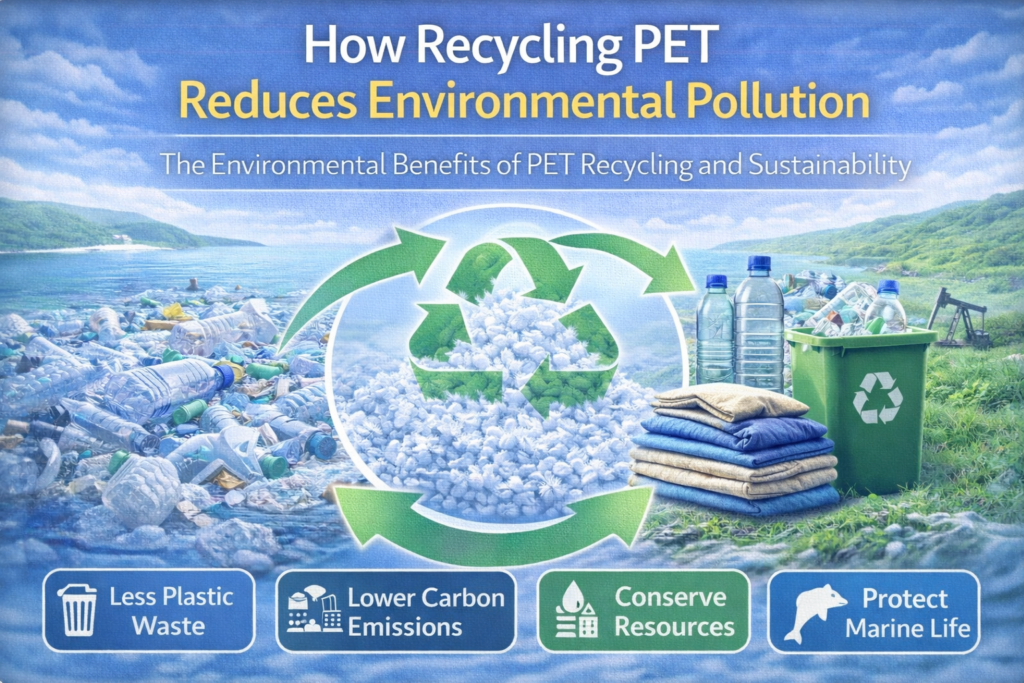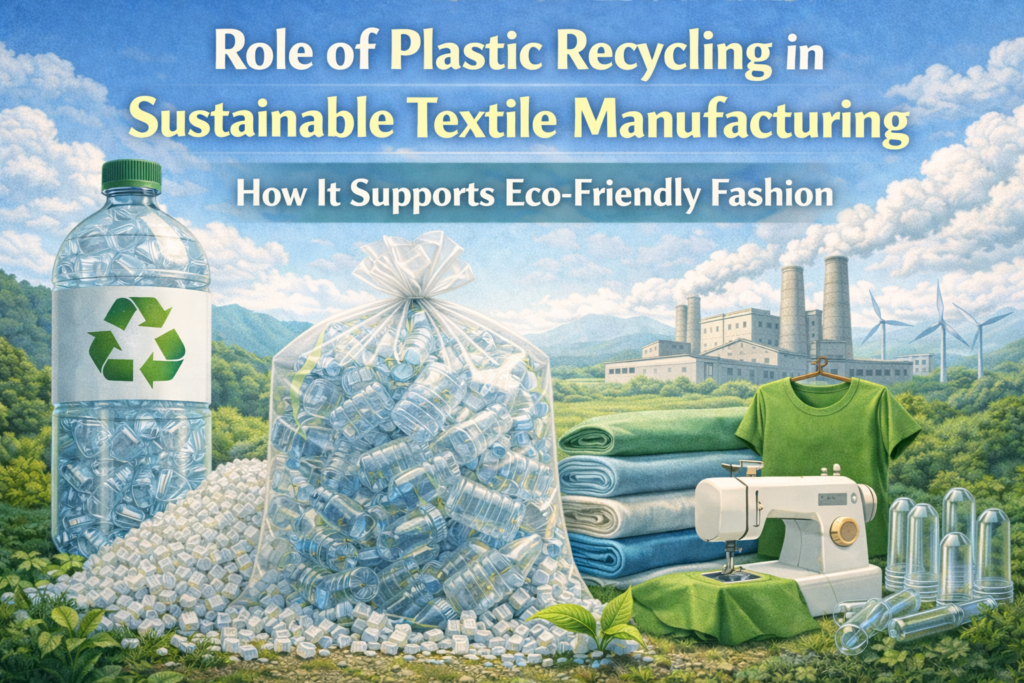
Over the last decade, sustainability has been a huge priority for both customers and industries. rPET plastic bottle recycling stands out as one of the most revolutionary solutions, recycling everyday plastic trash into recycled fabric. This reduces pollution and encourages the incorporation of sustainable materials into fashion and textiles.
What is rPET?
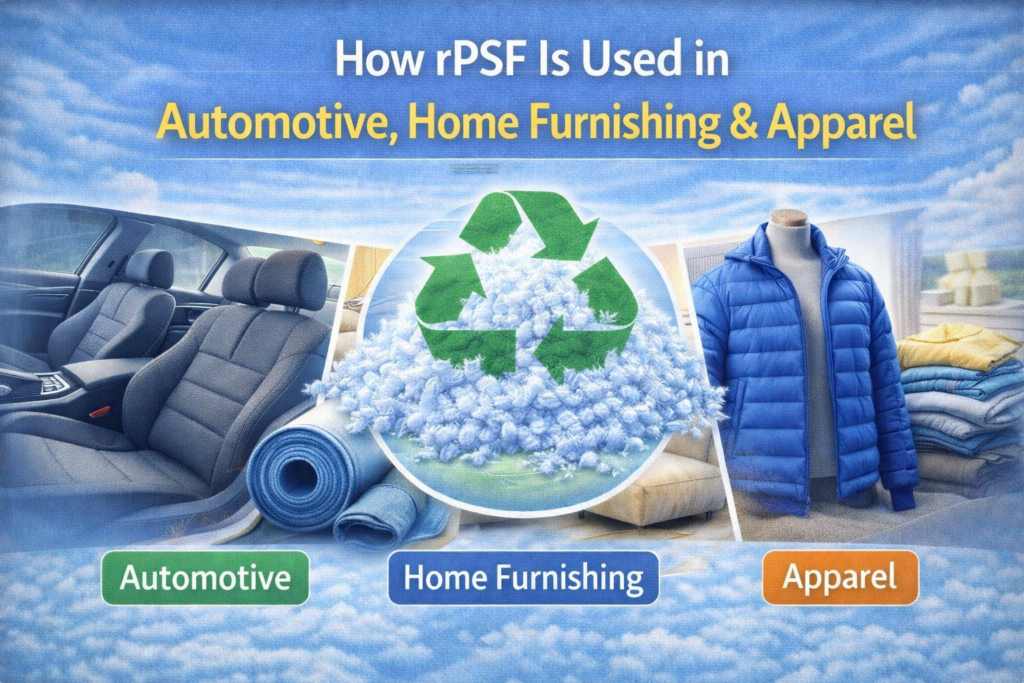
rPET is short for recycled polyethylene terephthalate, a product made from post-consumer plastic bottles. Polyethylene Terephthalate (PET) is most commonly utilized for water and soft drink bottles. By way of innovative recycling technologies, such abandoned bottles are transformed into rPET (Recycled PET) chips, which are raw materials for fabric manufacturing. These fabrics are mainly deployed in polyester fabrics, finding their way into clothing, home furnishing, sportswear, bags, and industrial uses.
The Process: From Plastic Bottles to Fabric
The recycling of PET bottles into rPET fabric is an organized process to ensure quality and sustainability:
- Collection & Sorting: Used plastic bottles are collected from households, commercial establishments, and recycling centers. Carefully color-coded and sorted by type to provide consistency and quality.
- Cleaning & Shredding: The collected bottles are washed thoroughly to strip off the labels, caps, and contaminants. After cleaning, they are shredded into tiny PET flakes.
- rPET Chips Conversion: The PET flakes are subsequently melted and formed into uniform, purity-free rPET chips. These chips are durable, versatile, and now ready for use as raw material in textile production.
- Fabric Production: The rPET chips are spun into yarn, which is weaved or knitted to form recycled polyester fabrics. The fabrics are subsequently used to produce garments, bags, upholstery, and other home textiles.
Benefits of rPET Fabrics to the Consumer
Besides providing environmental benefits, rPET fabrics also have useful benefits to consumers.
- Eco-Friendly Choice: By recycling plastic waste, rPET fabrics minimize the amount of bottles that otherwise would be left in landfills or oceans and contribute to a cleaner world.
- Light and Durable: PET polyester is tough, resistant to shrinkage, stretching, and wrinkling, and very durable. This means that products have a longer lifespan without compromising on quality.
- Value for Money: Shoppers get good quality fabrics at reasonable costs and, in the process, promote sustainable options that feed the circular economy.
- Versatile Applications: From fashion clothing and sports wear to bags, upholstery, and home furnishings, rPET materials provide comfort, style, and functionality in various segments.
- Fosters Sustainable Fashion: Purchase of PET products inspires brands to be environmentally friendly, having a positive effect on the environment.
rPET and the Circular Economy
With the use of rPET, one helps promote a circular economy where waste products are reused constantly. Use of rPET fabrics helps industries to reduce their reliance on virgin polyester which helps in reducing the consumption of energy, water and the emission of greenhouse gases. It is an excellent example of recycling and the sustainable products that can come of it for everyday use.
Also Read: What Are rPET White Flakes? Properties, Applications & Recycling Process
Conclusion
rPET plastic bottle recycling is not merely waste disposal—it is a move towards sustainable living and green fashion. This initiative recycles discarded bottles, helping the environment while providing ethically made, high-quality products to the consumer in the form of durable fabrics. Using rPET fabrics helps reduce plastic waste and promotes sustainability in everyday use.