With sustainability becoming a growing industry need, rPET chips have become a crucial raw material in the industry of packaging, textiles, and consumer goods. Knowledge of how PET chips are manufactured from recycled material is crucial to buyers and brands in understanding quality and safety.
What Are Recycled PET Chips?
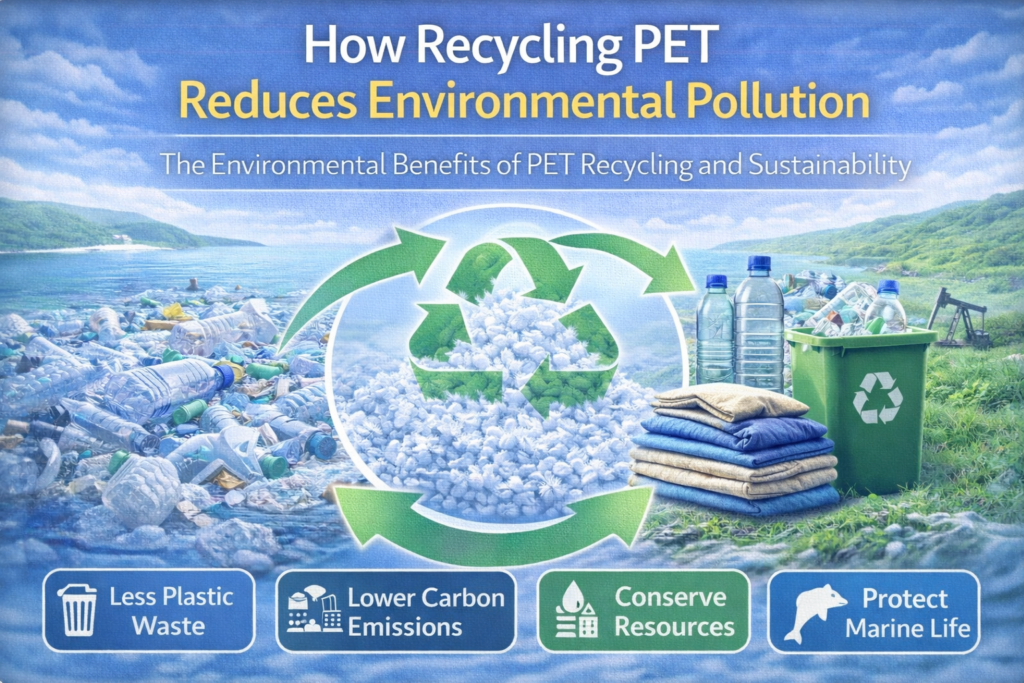
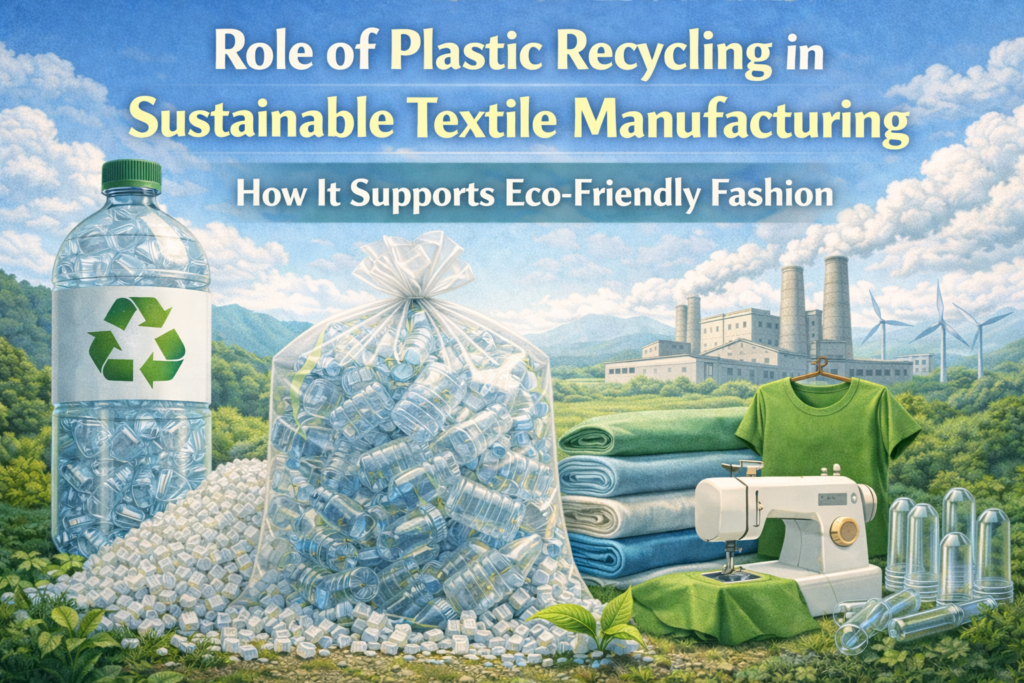
Recycled PET chips are small, uniform pellets made from post-consumer PET waste, primarily plastic bottles. These chips are used to manufacture fibres, films, sheets, and new bottles, supporting a circular plastic economy while reducing dependence on virgin petroleum-based materials.
Step 1: Collection of Post-Consumer PET Waste
It starts with the retrieval of the used PET bottles from the following sources:
- Municipal recycling facilities
- Deposit return systems
- Industrial and commercial waste streams
Collected bottles are sorted to remove non-PET plastics, metals, labels, and caps. Proper sorting is crucial, as contamination directly affects the quality of final PET chips.
Step 2: Sorting and Cleaning
Collected PET bottles are sorted according to:
- Material type: PET versus other plastics
- Colour (clear, blue, green, mixed)
Advanced optical sorting machines and human inspection guarantee a very high degree of purity. The bottles then undergo washing with hot water and detergent to remove dirt, glue, labels, and food residues. This stage ensures that the obtained material meets industrial and food-grade quality standards
Step 3: Size Reduction into PET Flakes
Shredded PET bottles are processed into PET flakes. These flakes undergo additional washing and drying to reduce:
- Moisture content
- Organic and inorganic contaminants
To produce uniform and solid rPET chips, high-quality flakes are required.
Step 4: Drying and Decontamination
For food packaging applications, flakes must undergo an aggressive decontamination procedure as follows:
- High-temperature treatment
- Vacuum or inert gas cleaning
This step removes absorbed contaminants and meets food-contact regulations. Before melting, the flakes are dried to obtain the optimal moisture content.—
Step 5: Filtration and Melting
Dried flakes undergo processing in an extrusion machine in which the flakes are heated to definite temperatures. The melted PET is then forced through fine screens to eliminate:
- Dust particles
- fibers Paper
- Other Impurities
This stage is important as it enhances the strength and clarity of the reclaimed PET chips.
Step 6: PET Chips, or Recycled PET, Pelletizing
The purified molten PET is then cut into uniform pellets, known as recycled PET chips. These chips are cooled and crystallized to enhance stability during storage and transportation.
At this stage, the following key quality parameters are checked:
- IV (Intrinsic viscosity)
- Color
- Pellet size
- Moisture content
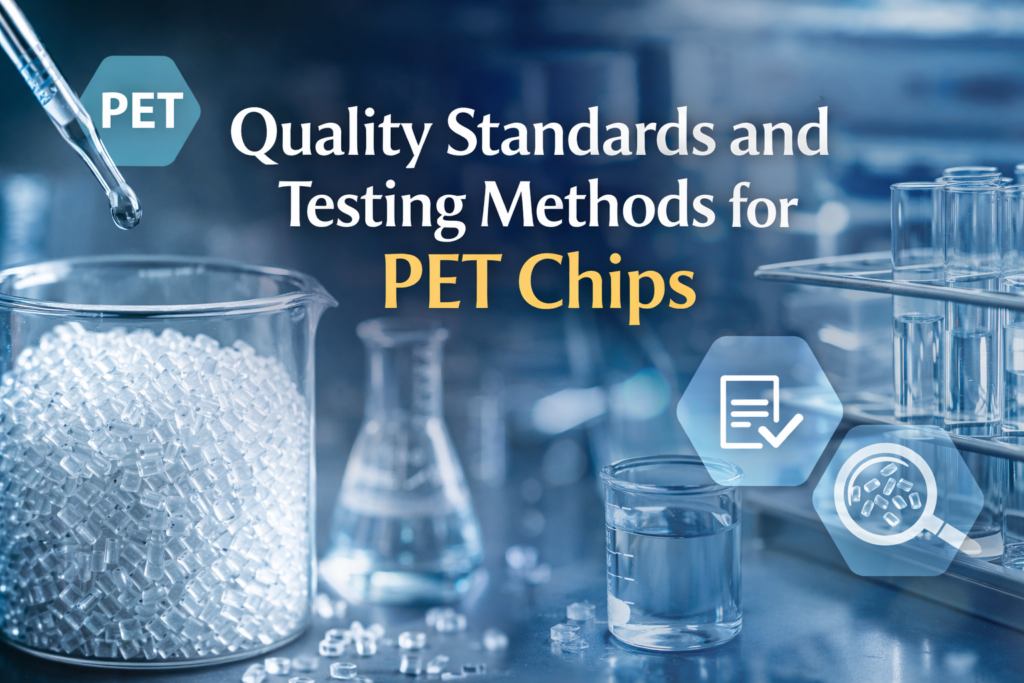
Step 7: Quality Testing & Packaging
Before shipping, rPET chips are subjected to rigorous tests to check quality according to industry standards. Depending on what the output is to be used for—fibres, films, or bottles—further tests may be conducted.
After approval, they are packaged in moisture-resistant packaging and delivered to various manufacturers abroad.
Importance of Manufacturing rPET Chips
Production of PET Chips from Recycled Material:
- Eliminates plastic waste in landfills and oceans
- Reduces carbon emissions and energy usage
- Furthers sustainability goals and laws
- Offers a cost-effective alternative for virgin PET
Also Read: Why Brands Are Shifting to Recycled Polyester Staple Fibre
Concluding Comments
The process of making PET chips from recyclables is a meticulously managed, tech-oriented process that converts trash into a treasure as a valuable industrial primary product. Recycling technologies advance, and in many applications, recycled PET chips are matching, and in some cases surpassing, virgin PET.
For brands and manufacturers aiming to reduce environmental impact without compromising quality, recycled PET chips are the smart and sustainable choice.