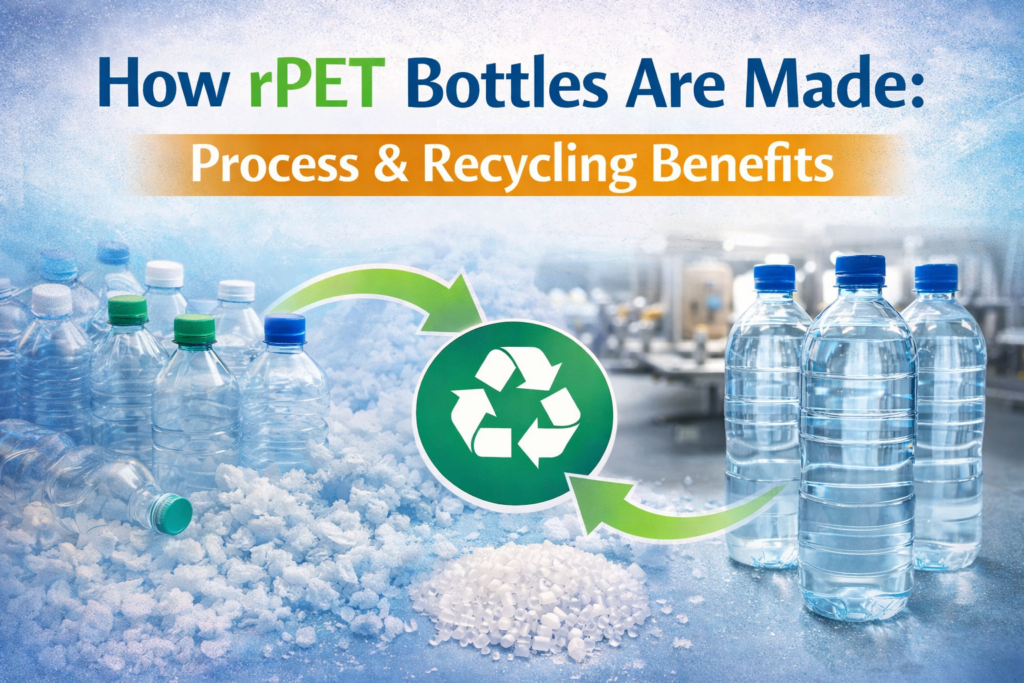
As consumers choose environmentally sustainable options, so will brands. This is why there is so much demand for eco-friendly packaging options. One recent innovation to come out of this industry is rPET. rPET packaging is made from single-use plastic, specifically, plastic water bottles. Through a recycling process, the bottles are first converted into resin and then transformed into packaging products for food and beverages, as well as non-food-grade packaging. In this blog, we will discuss how rPET chips are made from plastic waste and how the area is recycling plastic for eco-friendly products.
What is rPET and Why It Matters
rPET is recycling used PET bottles and the other recyclable waste associated with PET. Every year, millions of bottles find their way into oceans and landfills. In a recycling process, used bottles are diverted from the waste stream and repurposed into safe, reusable packaging material. rPET is an eco-friendly, repurposed product. Packaging made from rPET also helps reduce greenhouse gas emissions, save overall energy, and decrease the use of new plastic. Because it meets the goals of the circular economy, it is very highly regarded by eco-conscious brands.
Step 1: Collection and Sorting of Waste Plastic
Collecting PET bottles from homes, businesses, and recycling and waste management centers begins the recycling process. The collected waste plastic is sent to a recycling facility that performs initial sorting.
Bottles are sorted according to:
- Material
- Color
- Quality
- Level of Contamination
High-quality, clean PET bottles are selected for food-grade recycling. For food-grade recycling, accurate sorting is vital.
Step 2: Shredding and Washing
At each sorting stage, bottles are sent to a facility where they are crushed and shipped to large bottles that are made into small plastic pieces called flakes. At this stage, the plastic flakes still contain impurities such as caps, adhesives, and labels.
To achieve the level of purity needed for making quality rPET flakes, the waste is subjected to a multi-stage washing process that includes:
- Hot water wash
- Chemical wash
- Friction washing
- Rinses and float-sink separation
In producing quality rPET food-grade flakes, the plastic flakes must be free from all contaminants.
Step 3: Drying and Decontamination
After washing, the flakes are dried using high-temperature drying systems. Any residual moisture could make a difference in the quality of the finished products, so advanced dryers guarantee almost zero moisture content.
The flakes produced would also need to undergo SSP or other processes for decontamination to make them suitable for food-grade applications. This step increases the IV and removes microbial or chemical contamination.
Step 4: Melting and Extrusion into rPET Chips
The purified flakes are melted under controlled heat and pressure. This molten PET then passes through fine filters to remove remaining microscopic impurities. After filtration, the melted PET is extruded and cooled into uniform rPET chips (pellets). These wafers are used as raw materials in producing packaging goods. The quality of the chips is tested for:
- IV value
- Color clarity
- Melt flow
- Food-grade safety
Only high-quality rPET chips are approved for packaging use.
Step 5: Converting rPET Chips Into Packaging
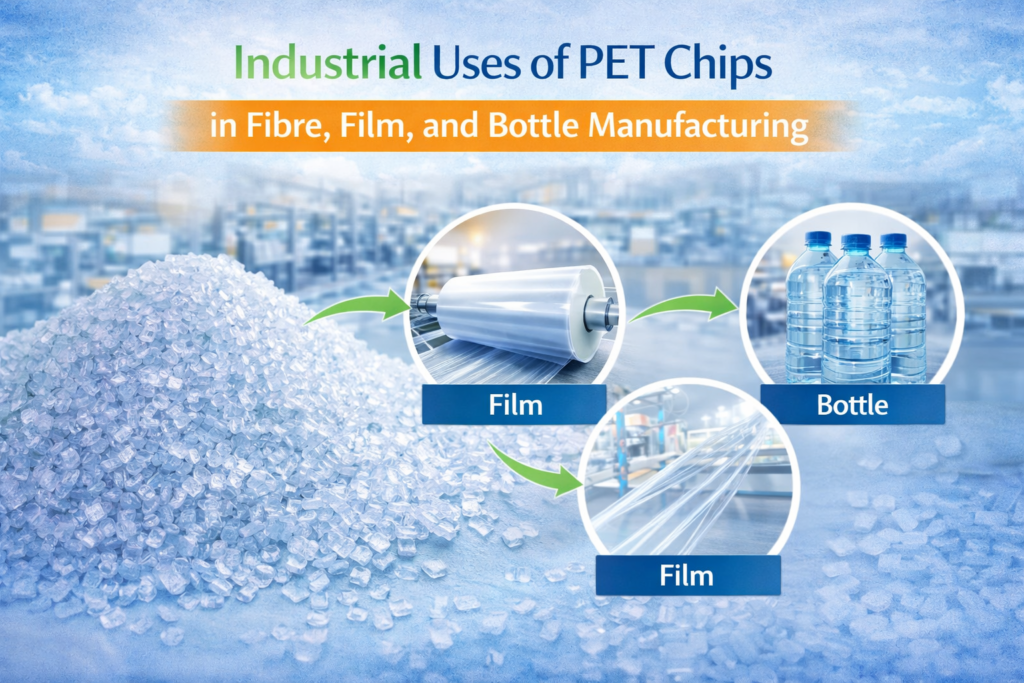
rPET chips are used by manufacturers in processes like:
- Injection molding
- Blow moulding
- Sheet extrusion
This results in products such as:
- Bottles for water, juice, and beverages
- Food-grade containers
- Cosmetic packaging
- Thermoformed trays and clamshells
- Packaging films
The final products provide all the strength and transparency of virgin PET with considerably lower environmental impact.
Also Read: rPET Flakes in India: Quality, Grades and Industrial Applications
Conclusion
This transformation of plastic waste into rPET chips is an outstanding example of how innovation can be a driving factor for sustainability. By turning the discarded bottles into high-value resin used in packaging, rPET supports the reduction of waste, carbon savings, and a greener future. With the global demand for eco-friendly packaging continuously rising, rPET is going to play a leading role in building a circular and sustainable packaging ecosystem.