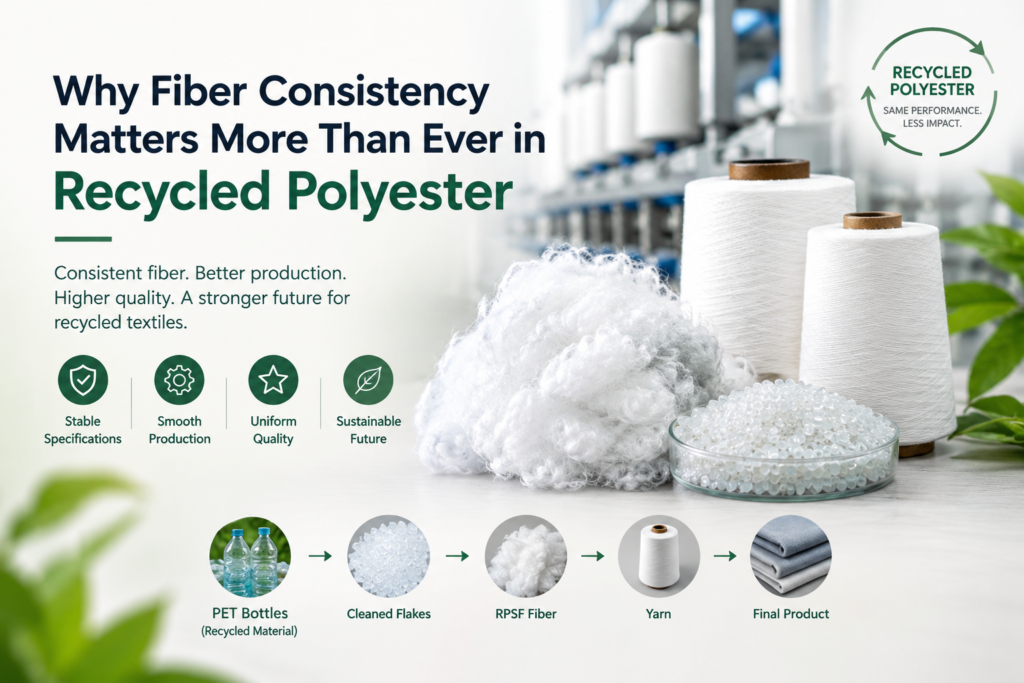
With the rise of sustainability around the world, rPET chips have become an essential material in the market of recycled plastics. These types of plastics are created from post-consumer PET waste, like plastic bottles. This helps in raising the sustainability of plastics and also provides a material with a value equivalent to virgin PET. This article will describe rPET chips, their production process, their applications, types, and increasing demand.
What Are rPET Chips?
The rPET chips refer to recycled polyethylene terephthalate chips. This corresponds to small chips that are made from recycled PET. The chips function as raw material that can be used to produce bottles, fiber, and plastic products.
Unlike traditional PET chips, rPET chips are obtained from recycled PET bottles and therefore qualify as very environmentally friendly and economical alternatives as well. Their use is also very important in popularizing the use of the “Circular Economy” concept.
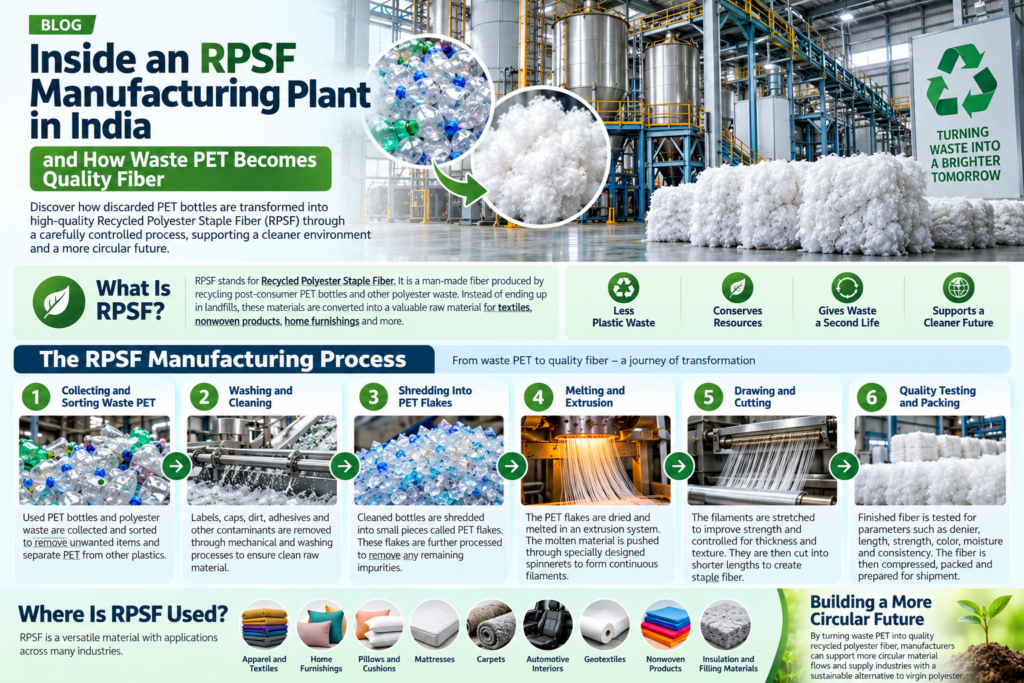
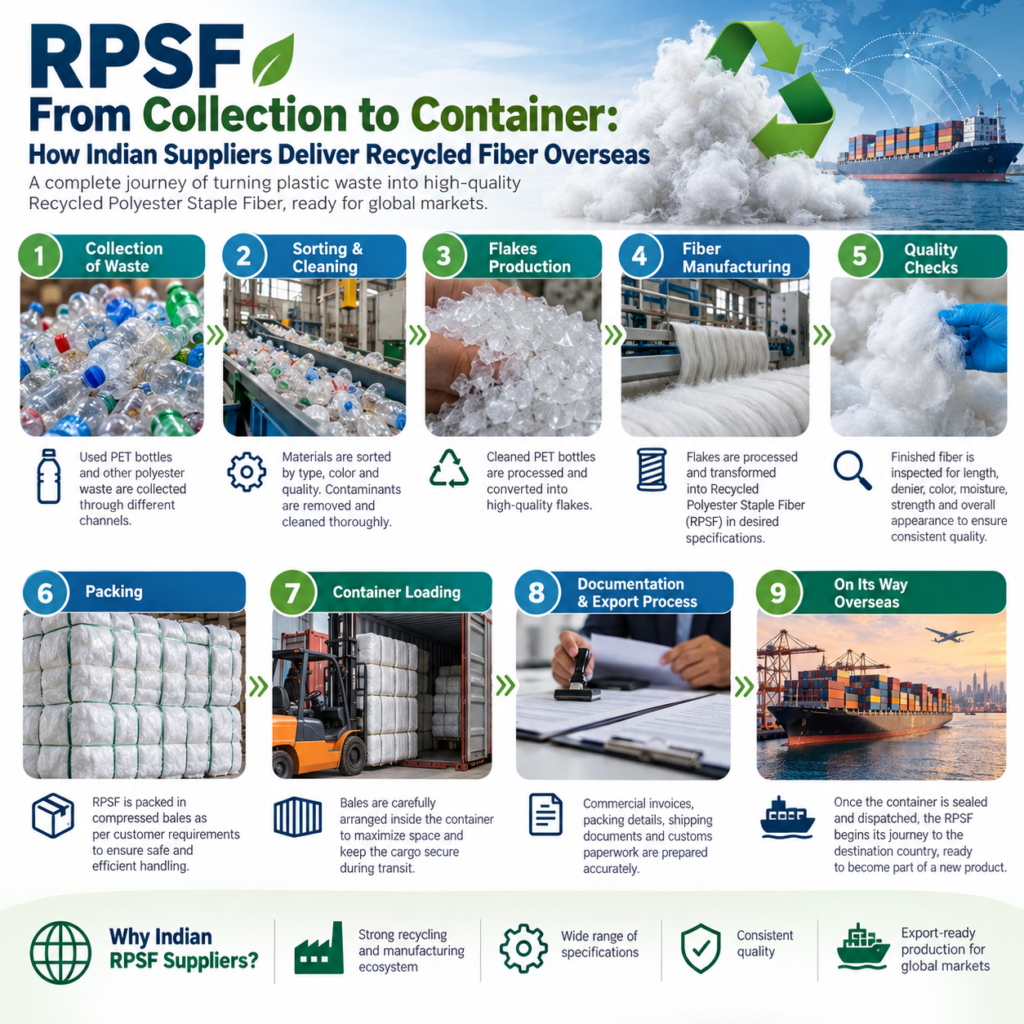
rPET chips manufacturing process:
1. Collection of PET Waste
The recycling process begins with the collection of PET bottles from waste collection centers, scrap vendors, and recycling schemes.
2. Sorting and Segregation
Bottles are sorted on the basis of material and color. Segregation of bottles helps ensure the quality of the bottles and prevents the entry of non-PET objects.
3. Washing and Cleaning
The used PET bottles undergo crushing and cleaning processes to remove the labels, caps, adhesives, as well as impurities. This is crucial, especially in the production of food-grade rPET chips.
4. Flake Production
The cleaned PET bottles are shredded to make rPET flakes, which are then washed and dried.
5. Pelletizing of rPET Chips
The flakes are melted, filtered, and extruded into rPET chips of uniform diameter and viscosity, ready for industrial processing.
What Are rPET Chips Used For?
rPET chips find their application in various sectors such as:
- Bottle-to-bottle recycling of water and beverage containers
- Textile production of polyester yarns and fibers
- Packaging sheets and films
- Strapping and injection molding products
- Non-woven fabrics and industrial components
Due to their versatility, rPET chips have emerged as the choice for manufacturers looking for environmentally responsible materials that do not impart any detrimental effects on the quality.
Types & Grades of rPET Chips
1. Food-Grade rPET Chips
They are used for packaging food and drinks and are recognized to satisfy strict norms of purity and safety.
2. Textile-Grade rPET Chips
Mainly applied in fibers and yarns for making clothes, household textiles, as well as non-woven materials.
3. Industrial-Grade rPET Chips
For strapping, flat roll stock, and molded plastic products that do not come into contact with food.
Each grade is developed depending on the purity, intrinsic viscosity (IV), and final application requirement.
What is the difference between rPET Chips & rPET Flakes?
- rPET flakes are shredded and cleaned fragments of PET bottles
- rPET chips are processed, melted, and pelletized into flakes
Chips are more consistent, easier to process, and more valuable when applied. They are better suited for advanced manufacturing.
Market Demand for rPET Chips
The market for rPET chips is expanding steadily due to:
- Government regulations on plastic waste management
- Brand pledges to use recycled materials
- Increasing consumer awareness of the environment
- Greater demand for sustainable packaging solutions
- Impact of packaging
The industrial sector has started to change from using virgin PET to rPET due to the need to reduce the carbon footprint, as well as meet the sustainability requirements.
Why rPET Chips Are the Future of Sustainable Manufacturing
Companies operating in the manufacturing sector It assists if rPET chips are used.
- Less plastic waste is sent to the landfill.
- Reduced greenhouse gas emissions
- Save natural resources
- Support circular economy efforts.
With sustainability emerging as a requirement in business, rPET chips are expected to play a vital role in the future of plastic manufacturing.
Conclusion
rPET chips represent more than just reused plastics; they are the future of sustainable production for industrial applications. rPET chips are versatile, from packaging through to industrial use, and they are eco-friendly. By using high-quality rPET chips, companies can help build a brighter, more sustainable future.