Sustainability has ceased to be a trend and has increasingly become the need of the day. Whether in the fashion industry, home textiles industry, automotive industry, or insulation industry, companies have started to transform themselves in terms of the materials used. One such product that’s gaining immense popularity as a choice of material is “Recycled Polyester Staple Fibre” or “RPSF”.
What Is Recycled Polyester Staple Fibre?
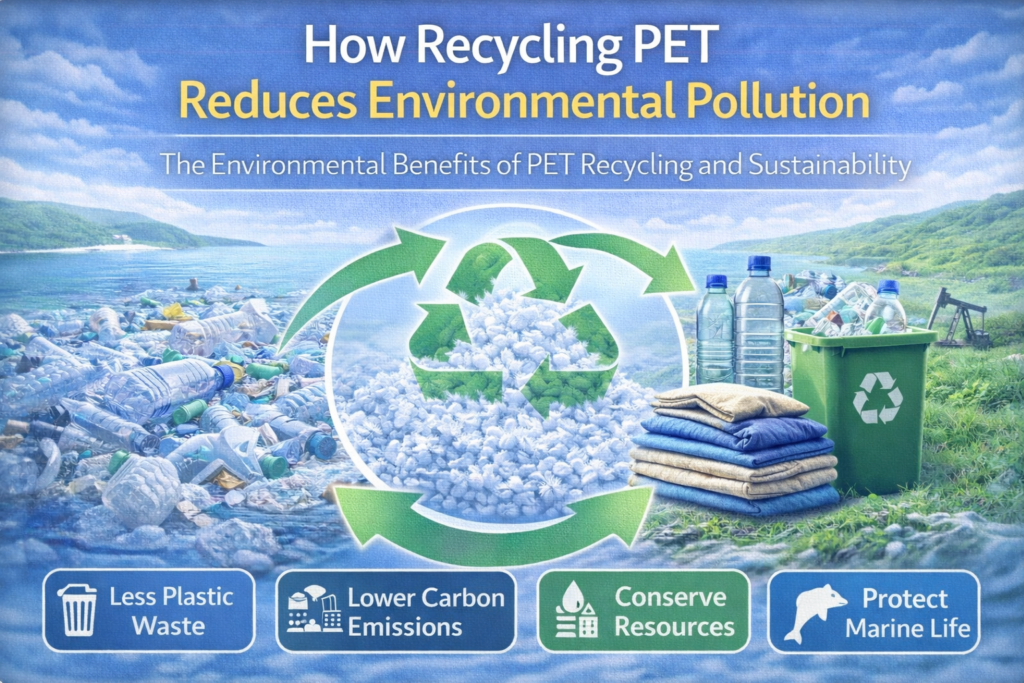
Recycled Polyester Staple Fibre is made from post-consumer plastic waste, primarily from used PET bottles. Such bottles are collected, cleaned, reduced into flakes, melted, and then produced into premium-quality fibres. This produces a robust and universal fibre that performs equally well to virgin polyester, but with a substantial negative effect on the environment.
With its closed-loop recycling system that converts waste into value, RPSF has become the preferred packaging supplier for brands that support the circular economy.
Why Are Brands Shifting from Virgin Polyester?
Virgin polyester is extracted from petroleum, which is a non-renewable resource. It requires large amounts of energy for processing, which in turn releases large quantities of carbon emissions. The need for sustainable strategies in brands has increased, with companies being challenged with regard to their carbon footprint, plastics, and reliance on oil.
The recycled polyester staple fibre meets the following challenges:
- Decreasing plastic waste in landfills and the ocean
- Consuming less energy compared to virgin polyester
- Reducing the emissions of greenhouse gases
- Supporting global sustainability commitments
Key Features of Recycled Polyester Staple Fibres
1. Responsibility to the Environment
Applications of RPSF will lead to a reduction in carbon emissions between 30-50% compared to that of virgin polyester. Brands that use recycled fibres are making a conscious effort to reduce waste and conserve the planet.
2. High Performance & Durability
Advances in modern recycling have ensured that the recycled staple polyester fibres have good strength, elasticity, and resistance. The fibres can be readily processed in products like yarn spinning, non-woven materials, filling, or insulation materials.
3. Cost Efficiency in the Long Term
Even though the start-up costs differ, the recycled fibres ensure that the raw material procurement remains stable for brands, shielding them against any variability in the price of petroleum. Additionally, tax benefits apply.
4. Adherence to International Standards
It can be certified according to international norms such as GRS (Global Recycled Standard), making it simpler for brands to satisfy export conditions and audits on sustainability.
Industries Promoting the Adoption of RPSF
Some of the sectors that are taking the lead in the application of recycled polyester staple fibre are:
- Fashion & Apparel: Recycled materials, sportswear, and fast fashion clothing are now using R-PET in place of virgin polyester.
- Home Textiles: Pillows, cushions, quilts, and mattresses employ RPSF for softness and strength.
- Automotive: Car interiors, insulation panels, and seat cushioning are increasingly utilising recycled fibres.
- Construction & Insulation: It is commonly used in acoustic and thermal insulation materials.
Why Consumers Like Brands that use Recycled Fibre
Consumers today investigate how products are created. Brands that incorporate recycled polyester staple fibre into their products make their customers satisfied and loyal to their brand because they take good care of the planet.
Search trends reveal increasing interest in keywords such as eco-friendly fibre, recycled polyester, and sustainable textile materials; thus, RPSF is an SEO-friendly material choice too.
The Future of Recycled Polyester Staple Fibre
With the enforcement of government regulations on the management of plastic waste and the target of net-zero by brands, recycled polyester staple fibre would become the norm rather than the exception. Advances in the technology of recycling would increase the quality of the fibre.
“The brands that adopt RPSF are not only minimising their negative impact on the environment,” says Blome, “they are protecting themselves against an
Also Read: rPET Chips Recycling Process: From PET Waste to Reusable Material
Final Thoughts.
Moving to recycled polyester staple fibre represents a positive strategy for sustainability, compliance, and future development. This approach links sustainability and positive performance. In the wake of an increasing global call for sustainable materials, companies that use RPSF will be at the forefront of sustainable production in the future.