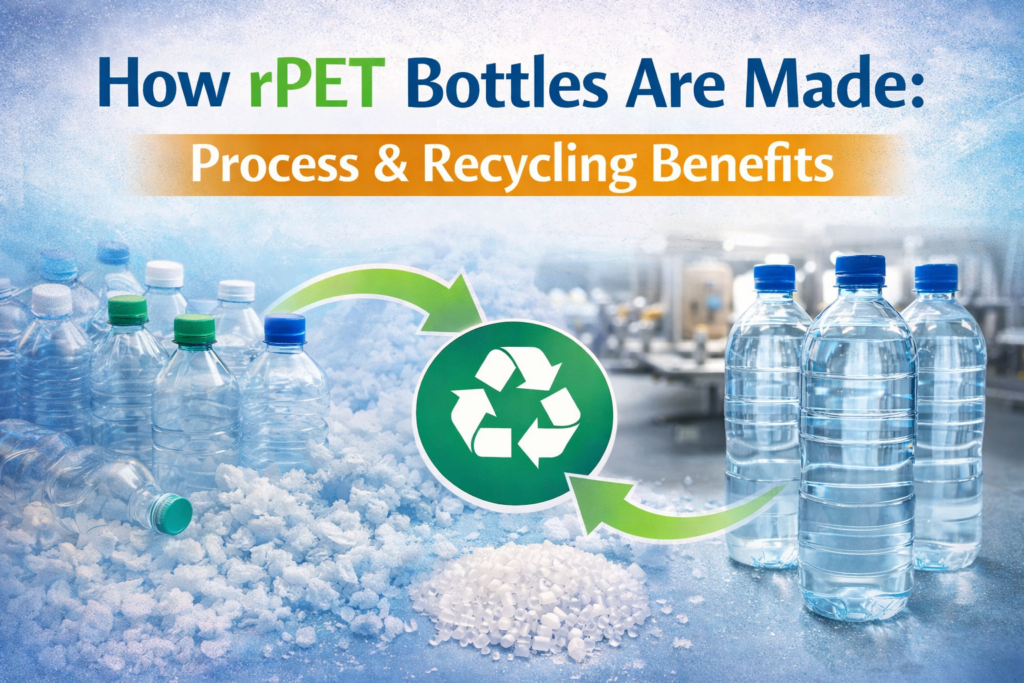
Bottle-to-bottle recycling has emerged as an important technology and method that can help deal with plastic and support a circular economy. The focus of this sustainable technology is based on flakes of rPET, which can recycle PET plastic bottles and reuse them in the form of new, food-grade plastic bottles. It is necessary to understand how flakes of rPET are made and what properties they require according to food-grade standards.
What Are rPET Flakes?
rPET flakes, also known as recycled polyethylene terephthalate, rPET, refer to materials made from post-consumer PET bottles. rPET flakes are purified, sorted, and processed to remove any contamination. In bottle-to-bottle recycling, high-quality rPET flakes undergo additional processes to ensure they meet food-grade guidelines.
Importance of Bottle-to-Bottle Recycling
Bottle-to-bottle recycling helps make PET bottles recyclable and reusable numerous times without affecting their quality. rPET flakes act as an important material link in this entire process, as they are the basic feedstock from which waste is converted into new bottles.
rPET Flakes Production Process for Bottle-to-Bottle Recycling
Food-grade rPET flake production requires a series of processes:
- Collection & Sorting: The used PET bottles are collected and sorted according to color and type. Clear PET bottles make better bottle-to-bottle recycled materials because they have greater purity.
- Grinding & Size Reduction: The bottles are flaked into identical pieces to facilitate washing and processing.
- Hot Washing & Decontamination: The flakes are subjected to hot washing with detergent to remove any labeling materials, adhesives, oil, and contaminants. This process is important for food packaging.
- Drying & Quality Inspection: The cleaned flakes are dried and then checked for their moisture content, intrinsic viscosity, and contaminants.
- Approval for Food Use: Advanced decontamination technology and traceability solutions are in place to ensure that the flakes of rPET produced are safe to come into direct contact with food.
Food Grade specifications for rPET Flakes
When it comes to bottle-to-bottle recyclable materials, rPET flakes need to meet the global food safety standards. Some of the key factors that
- Low levels of contaminants (PVC, metals, and other polymers)
- Intrinsic Viscosity (IV) for bottle strength
- Deodorant and color-stable flakes
- Compliance with FDA, EFSA, and analogous food-contact regulatory requirements
- Utilization of accredited technologies for recycling and decontamination
Those are the only types of rPET flakes qualified for the production of food and beverage packages.
Applications of food-grade rPET Flakes
Quality rPET flakes are applied in:
- Water and soft drink bottles
- Edible Oil and Dairy Products packaging
- Drink preforms
- Food-contact containers
Such applications validate the safety and performance standards maintained by rPET flakes.
Advantages of rPET Flakes Use in Bottle-to-Bottle Recycling
The use of rPET flakes in bottle-to-bottle recycling has several advantages:
- Reduces plastic waste in landfills
- Reduces the use of virgin PET materials because it is made from recycled materials.
- Aids in achieving recycling and packaging requirements
- Encourages circular manufacturing practices
Also Read: The Future of PET Bottles: Innovation, Reuse & Eco-Friendly Trends
Conclusion
rPET flakes for bottle-to-bottle recycling offer a viable and scalable technology for sustainable packaging solutions. As a result of advanced processing and strict food-grade regulations, flakes made from rPET can be reused for making new bottles without any quality and safety concerns.
1. Are rPET flakes suitable for food contact applications?
“Yes, food-grade flakes of rPET produced with accepted technologies are safe for direct food contact.”
2. What are the differences between r-pet flakes and virgin PET flakes?
The rPET flakes are considered recycled sources, while virgin PET sources come from petrochemicals.
3. What are the advantages of using clear rPET flakes in bottle-to-bottle recycling?
This is because clear flakes have better purity and color consistency suitable for new bottles.