Just when the question of sustainability has come to the front and center for the food and beverage industry, rPET chips, also known as recycled polyethylene terephthalate chips, have been gaining attention from both brands and consumers to date as a safer and eco-friendly substitute for virgin plastic. But a basic question across all brands and consumers is-are food-grade rPET chips safe for food packaging?
The short answer is yes-when it’s manufactured under strict food-grade standards. Let’s see how rPET chips are redefining food packaging safety and why they are becoming the future of sustainable packaging.
What Are rPET Chips?
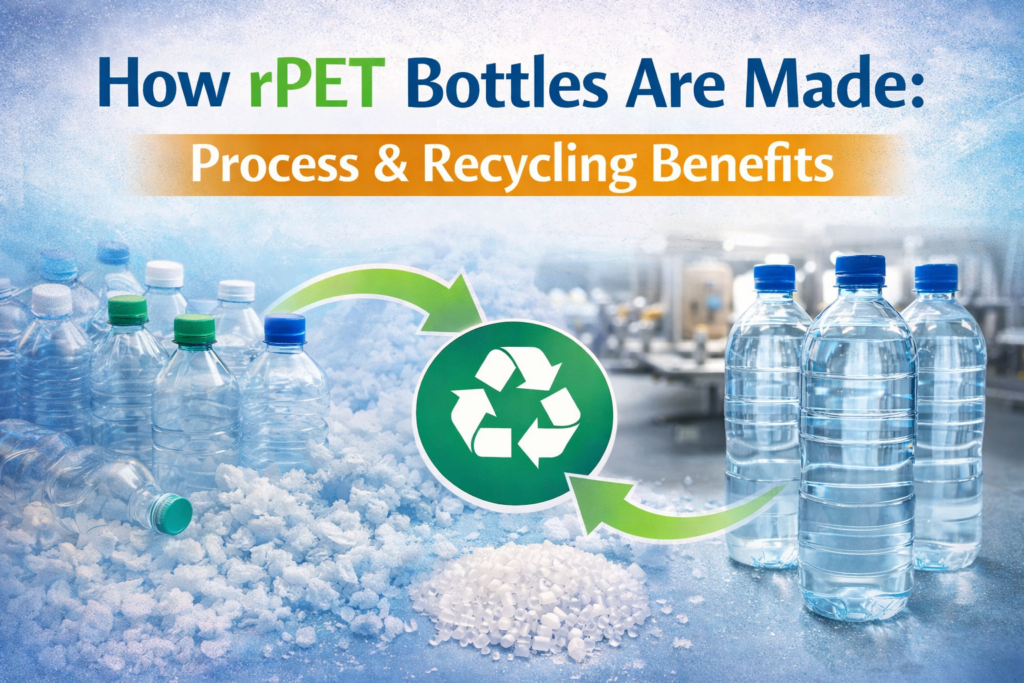
rPET chips are small granules produced from recycled PET plastic, primarily sourced from post-consumer PET bottles. These bottles are collected and cleaned, processed to flakes, and then converted into chips through advanced recycling technology.
Food-grade rPET chips are subjected to further purification and decontamination processes to remove impurities, ensuring they meet international food safety standards.
Are rPET Chips Safe for Food Packaging?
Yes, food-grade rPET chips are safe if they are produced following proper procedures. Food safety organizations, such as the US FDA and EFSA (the European Food Safety Authority), have accepted rPET packaging if it has followed certain guidelines.
Advanced recycling techniques involve the use of the
- High-temperature processing
- Vacuum Decontamination
- Solid State Polymerization (SSP)
These processing steps remove contaminants to make the material pure so that the rPET chips can be used for food contact purposes.
How rPET Chips Improve Food Packaging Safety
rPET chips are not only sustainable but also work towards improving food safety in many ways:
1. High Purity & Quality Control
Food-grade rPET chips are manufactured in controlled conditions with continuous testing. This gives them strength and safety similar to virgin PET.
2. Strong Barrier Properties
rPET retains a very high level of resistance to moisture, oxygen, and contaminants from outside sources.
3. Thermal & Chemical Stability
The rPET chips are heat-resistant and do not react when exposed to food products, which makes them suitable for bottles, trays, and containers.
Why Brands Are Switching to rPET Chips
Leading brands in the food and beverage industry are now turning to rPET chips in view of the safety, sustainability, and trust factor associated with them.
Key benefits include:
- Lower carbon footprint when compared with virgin plastic
- Reduces dependency on fossil fuels
- Adherence to international regulations on sustainability
- Enhanced brand reputation & consumer confidence
With governments everywhere promoting the use of recycled materials for packaging, these rPET chips ensure that brands adhere to these requirements while preserving food safety.
rPET Chips vs Virgin PET: Is There a Safety Difference?
From a food safety perspective, high-quality rPET chips perform on par with virgin PET. The main difference lies in environmental impact. rPET significantly reduces plastic waste and greenhouse gas emissions without compromising packaging performance or safety.
Common Concerns About rPET in Food Packaging
Some consumers may have concerns about contamination or smell within recycled plastic. However, modern recycling and testing methods guarantee that food-grade rPET packaging materials are odorless, clean, and pure. Such materials from reputable suppliers are essentially contamination-free.
The Future of Food Packaging Using rPET Chips
With the growth of circular economy schemes, rPET chips are set to become a key part of the closed-loop food packaging chain, in which bottles are converted back into bottles. Advances in recycling technologies are making it possible for rPET to become a cleaner, more efficient food material.
Also Read: Is Food-Grade Recycled PET Safe? Standards, Testing & Regulations Explained
So, are the rPET chips safe for food purposes? Absolutely! Provided they pass the certification process for the production of food. The rPET chips are changing the dynamics of the safety of food packaging.
For food brands wanting to achieve sustainability targets without having an impact on safety, rPET chips are no longer an alternative but the future.