With the growing need to manage plastic waste and the demand for sustainability, food-grade recycled PET, also known as rPET, has emerged as a promising substitute for conventional plastic. A frequently asked question in connection with the need for sustainability through the use of recycled materials in the packaging of foods and beverages is: Is food-grade recycled PET safe for packaging use?
This blog informs and guides the audience about the safety, norms, and testing procedures that regulate the use of food-grade rPET.
What Is Food-Grade Recycled PET?
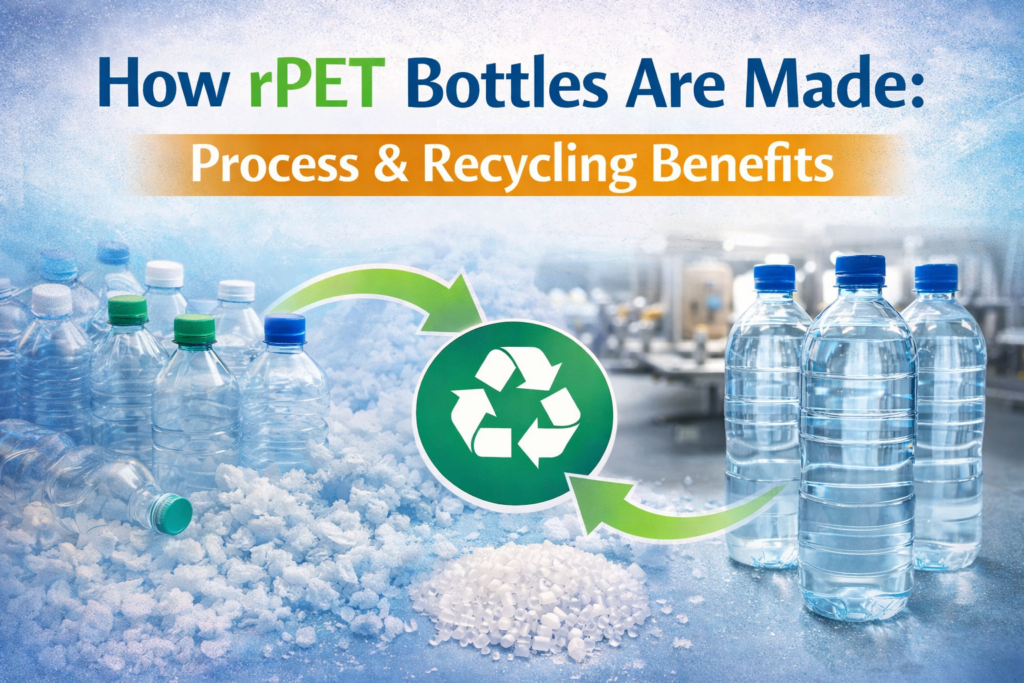
Food-grade rPET is made from post-consumer PET bottles, which are collected, sorted, cleaned, and then processed through a sophisticated recycling process. In contrast to normal recycled plastics, food-grade rPET is subjected to rigorous processes in order to ensure its cleanliness and suitability for packaging food.
It is often employed for:
- Bottles of water, soft drinks,
- Containers for edible oils
- Food trays and clamshell packages
- Dairy & Juice Packaging Industry –
What is rPET, and how is it made safe for use in packaging food
Food-grade rPET is produced through accepted recycling technology, including:
- Super-clean recycling
- Chemical recycling
- High-temperature vacuum decontamination
These processes remove:
- Chemical contaminants
- Odors and residues
- Micro-organic impurities
Only rPET that complies with food safety requirements worldwide is permissible for food contact applications.
International Standards on Food-Grade rPET
“Food-grade” recycled PET is required to obey the following stringent regulations of the international community:
1. FDA (USA)
The United States’ Food and Drug Administration (FDA) approves processes for recycling rather than the final product. It is only possible through approved processes for recycling that it is possible to get food-grade rPET.
2. EFSA (European Union)
European Food Safety Authority (EFSA) scrutinizes rPET recycling technology and makes sure that contaminant migration levels are at a safe limit.
3. FSSAI (India)
The use of food-grade rPET in India is allowed by the FSSAI under certain standards, including traceability, processing, and migration requirements.
4. ISO & Global Certifications
Typically, the manufacturers will follow.
- ISO 22000 (Food Safety Management)
- ISO 9001 (Quality Management
- Global Recycled Standard (GRS)
Methods for Testing Food-Grade rPET
The food-grade rPET material requires a series of tests to ensure it meets the
- Migration testing: Testing whether harmful substances migrate into food
- Intrinsic Viscosity (IV) testing: Verifies that a substance is strong
- Contaminant Challenge Testing: Simulates worst-case contamination scenarios
- Sensory testing: This ensures that there is no transfer
Only Batches that have cleared all the tests alone are approved for food packaging.
Is Food-Grade rPET As Safe As Virgin PET?
Yes. Food-grade rPET is as safe as virgin PET if it is made through approved processes. Licensed food-grade rPET is deemed to be as safe as virgin PET, provided it is made by acceptable processes. Numerous studies have shown that recycled PET is not a hazard to human health.
In fact, in most countries, drink manufacturers are currently utilizing 100% rPET bottles, ensuring the material’s safety and efficiency.
Advantages of Using Food-Grade Recycled PET
- Safe for direct food contact
- Reduces plastic waste and pollution
- Reduces carbon emissions by a minimum of 60%
- Promotes circular economy objectives
- Helps brands meet ESG targets related to sustainability
Common Myths About Food-Grade rPET
Myth: “Recycled plastics are not safe for containing food.”
Fact: It’s only non-certified recycled plastics that are harmful to use. Food-grade rPET, on the
Myth: rPET impacts taste/smell
Fact: rPET, after appropriate processing, will not affect sensory testing.
Also Read: Recycled PET vs Virgin PET: Complete Comparison, Uses & Benefits
Recycled PET that meets food-grade requirements is safe, standardized, and environmentally friendly when processed under approved specifications. Since it is strictly standardized, extensively tested, and approved by worldwide regulatory authorities, rPET is a safe and environmentally friendly alternative to traditional plastic. With the ever-tightening regulations and the need for sustainability, the future of responsible packaging in the food industry will be through food-grade rPET packaging.