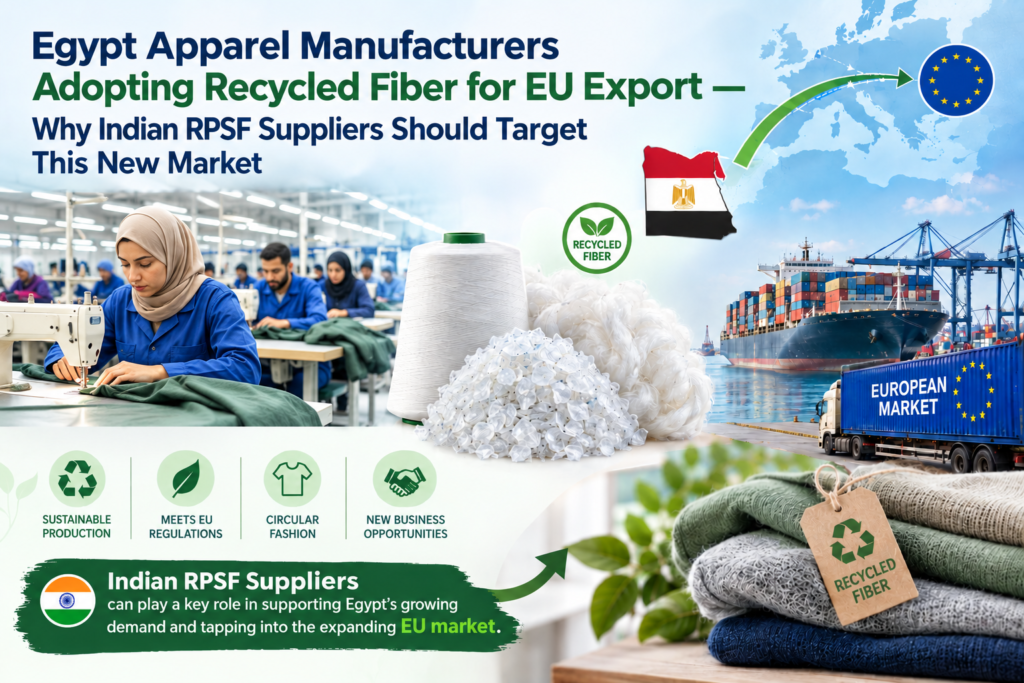
Egypt is becoming an increasingly important sourcing hub for international apparel brands, particularly across European markets. As EU regulations and buyer expectations place greater emphasis on sustainable and circular textiles, Egyptian apparel manufacturers are looking for ways to improve the sustainability profile of their products.
This shift is creating an interesting opportunity for Indian Recycled Polyester Staple Fiber (RPSF) suppliers.
Egypt already has an established textile and apparel manufacturing ecosystem, while the European Union continues to push the industry toward greater use of recycled materials, improved traceability, recyclability, and responsible production.
Egypt’s Growing Apparel Export Opportunity
Egypt has a well-established textile and ready-made garment industry serving international markets. Its proximity to Europe and established export relationships make it an important manufacturing location for brands sourcing apparel from the region.
The Egyptian textile industry is also working toward expanding its export capabilities and improving manufacturing competitiveness. Industry bodies describe the sector as one of Egypt’s key export-oriented manufacturing industries, with ambitions to significantly increase textile and apparel exports.
For apparel manufacturers targeting European buyers, sustainability is increasingly becoming part of the sourcing conversation.
Why Recycled Fiber Is Becoming More Important
The EU’s textile strategy aims for textile products placed on the European market to become more durable, recyclable and, to a large extent, made from recycled fibres by 2030. The strategy also promotes circular production and greater responsibility throughout the textile value chain.
The Ecodesign for Sustainable Products Regulation (ESPR) has identified textiles and apparel as priority product categories. Future requirements are expected to place greater emphasis on product sustainability, material composition, circularity and transparency.
So for Egyptian apparel makers, using recycled polyester could be part of a wider strategy to supply sustainability-minded European consumers.
Where Indian RPSF Suppliers Come Into Play
This is where Indian RPSF manufacturers can explore a new export opportunity.
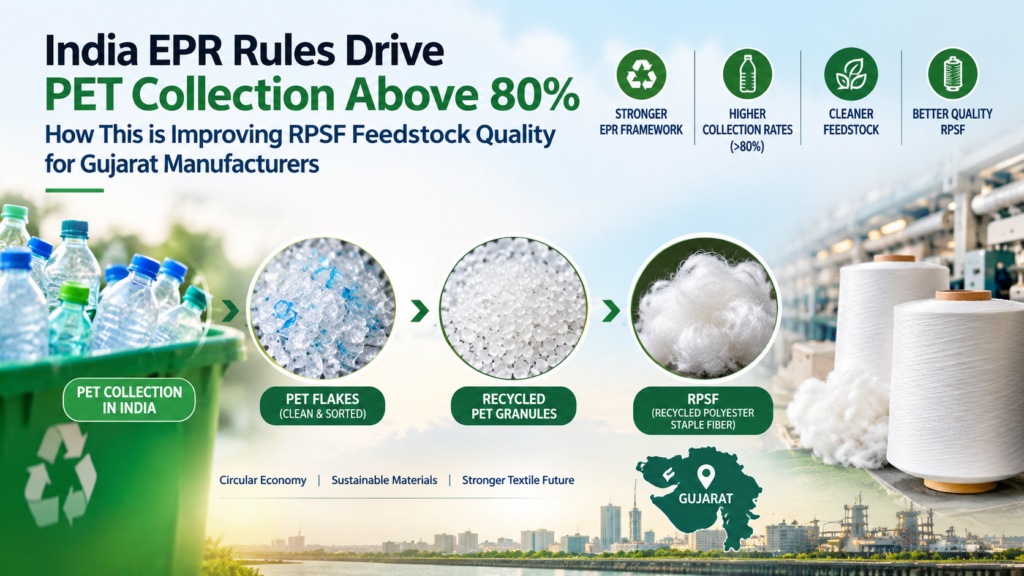
High-quality RPSF made from post-consumer PET bottles can be used in yarns, fabrics, nonwoven materials, home textiles and other textile applications. Egyptian manufacturers seeking consistent, reliable international supply of recycled polyester inputs will find partnerships with suppliers providing consistent specifications to be of value.
For Indian suppliers, Egypt can also serve as a strategic market between established Asian textile supply chains and European apparel production.
Quality and Consistency Will Count
But there’s more to doing business in Egypt than selling recycled fiber.
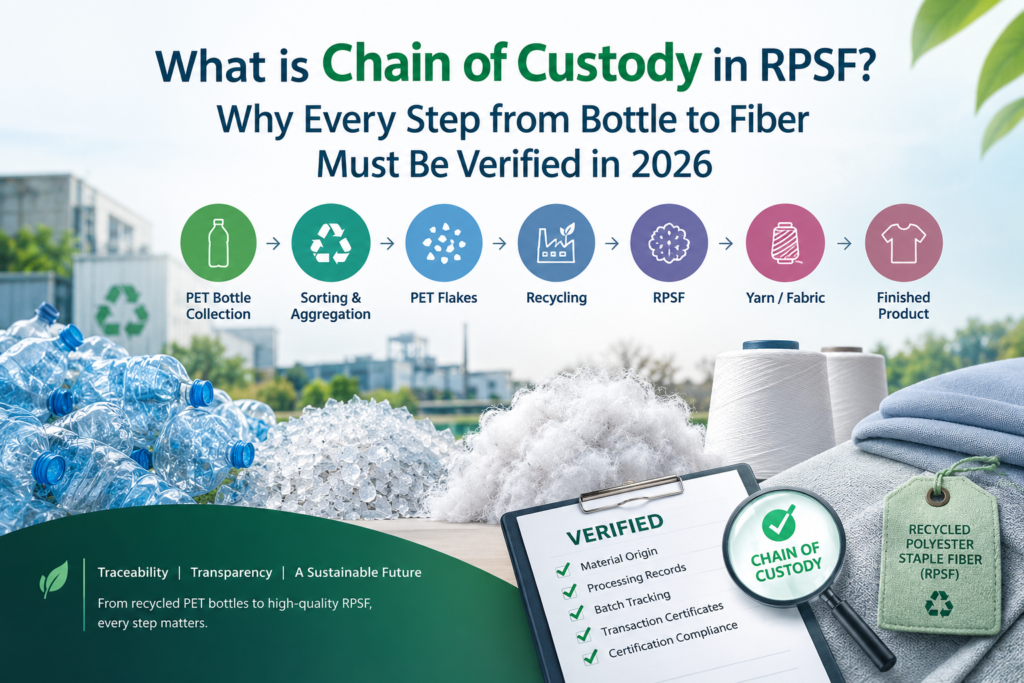
Apparel manufacturers supplying European buyers increasingly need reliable raw-material documentation, consistent fiber specifications and supply-chain transparency. The EU is also developing a Digital Product Passport framework for textiles, designed to make relevant product and sustainability information more accessible throughout the value chain.
RPSF suppliers should therefore be prepared to communicate:
- Source of recycled raw material
- Denier and fiber specifications
- Cut length Quality consistency
- Recycled content documentation
- Certifications relevant to
- Data of traceability
- Capability to package and ship ?
These factors can help Egyptian manufacturers to evaluate suppliers on more than just price.
Why Egyptian RPSF Manufacturers Should Watch India
India’s extensive recycling and polyester manufacturing ecosystem provides Indian RPSF suppliers the opportunity to supply recycled polyester products to international textile markets.
The Egyptian apparel industry, which has strong connections with European markets, offers a pathway for suppliers of recycled fibers seeking to grow outside of their conventional markets.
Meanwhile, European sustainability requirements are becoming more comprehensive. The EU has already adopted textile-related measures under its circular-economy framework and is developing future ecodesign rules for apparel.
Growing the Next RPSF Export Market
For Indian suppliers of RPSF, Egypt should be part of a larger international market development strategy.
This is more than simply selling recycled polyester fiber. It seeks to be a reliable source of raw materials for Egyptian textile and apparel manufacturers who want to compete in European markets, which are becoming more focused on sustainability.
With circular textile production on the rise, suppliers that can deliver consistent quality, traceability of recycled content, certifications and reliable supply can build stronger relationships with manufacturers serving the EU.
By reaching out to Egypt’s apparel and textile industry today, Indian RPSF manufacturers could take advantage of a growing cross-border supply chain that connects India’s recycling capabilities, Egypt’s manufacturing base and Europe’s sustainable textile market.