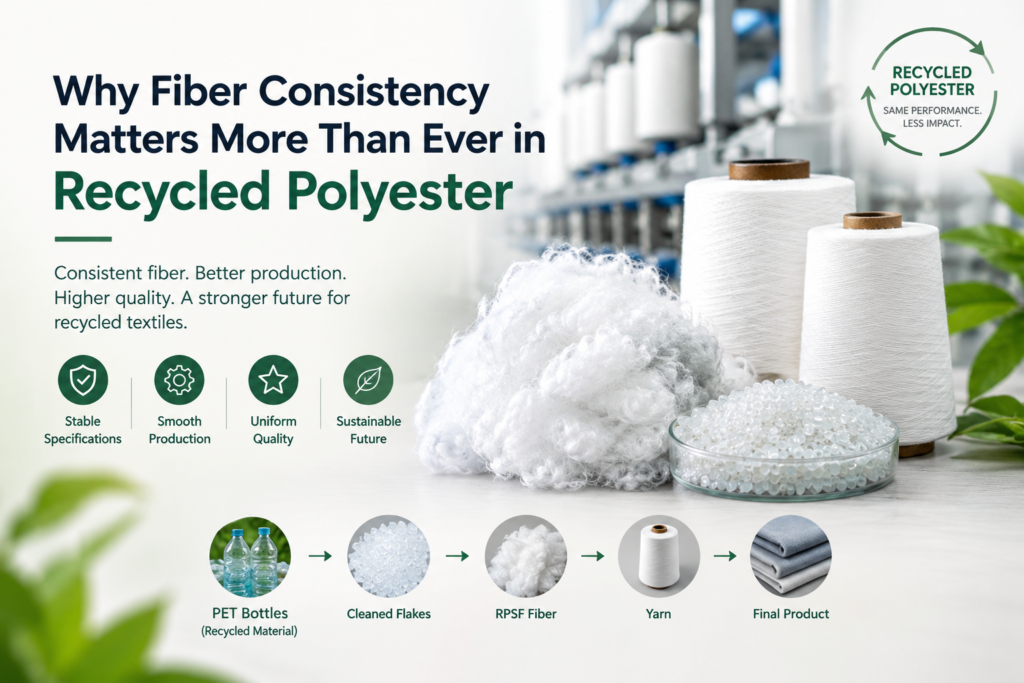
In today’s world, where sustainability matters, industries are turning to recycled materials to lessen their environmental impact. One such innovation is Regenerated Polyester Staple Fibre (PSF), made from recycled PET bottles. This process helps manage plastic waste and produces high-quality fibre used in textiles, automotive materials, home furnishings, and non-woven products.
The Regenerated PSF manufacturing process converts discarded plastic bottles into valuable polyester fibre through several controlled steps. Let’s look at how this transformation occurs.
What Is Regenerated PSF?
Regenerated Polyester Staple Fibre (PSF) is a synthetic fibre made by recycling PET (Polyethylene Terephthalate) plastic bottles. Instead of sending plastic waste to landfills or oceans, manufacturers turn it into durable and versatile fibre used across many industries.
This sustainable material performs similarly to virgin polyester while significantly cutting carbon emissions, energy use, and plastic pollution.
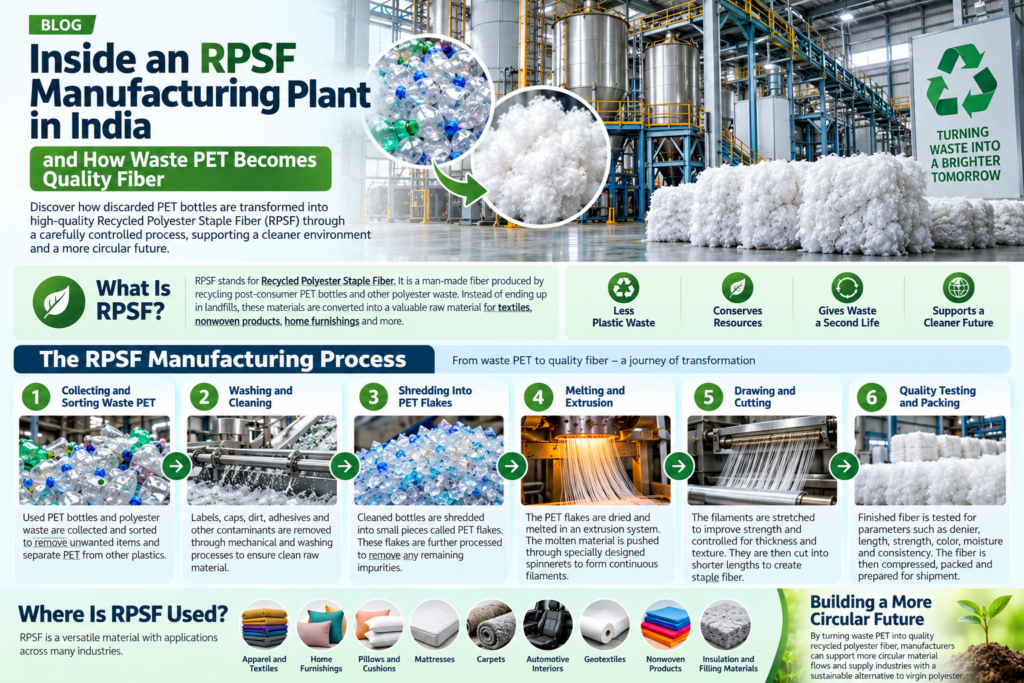
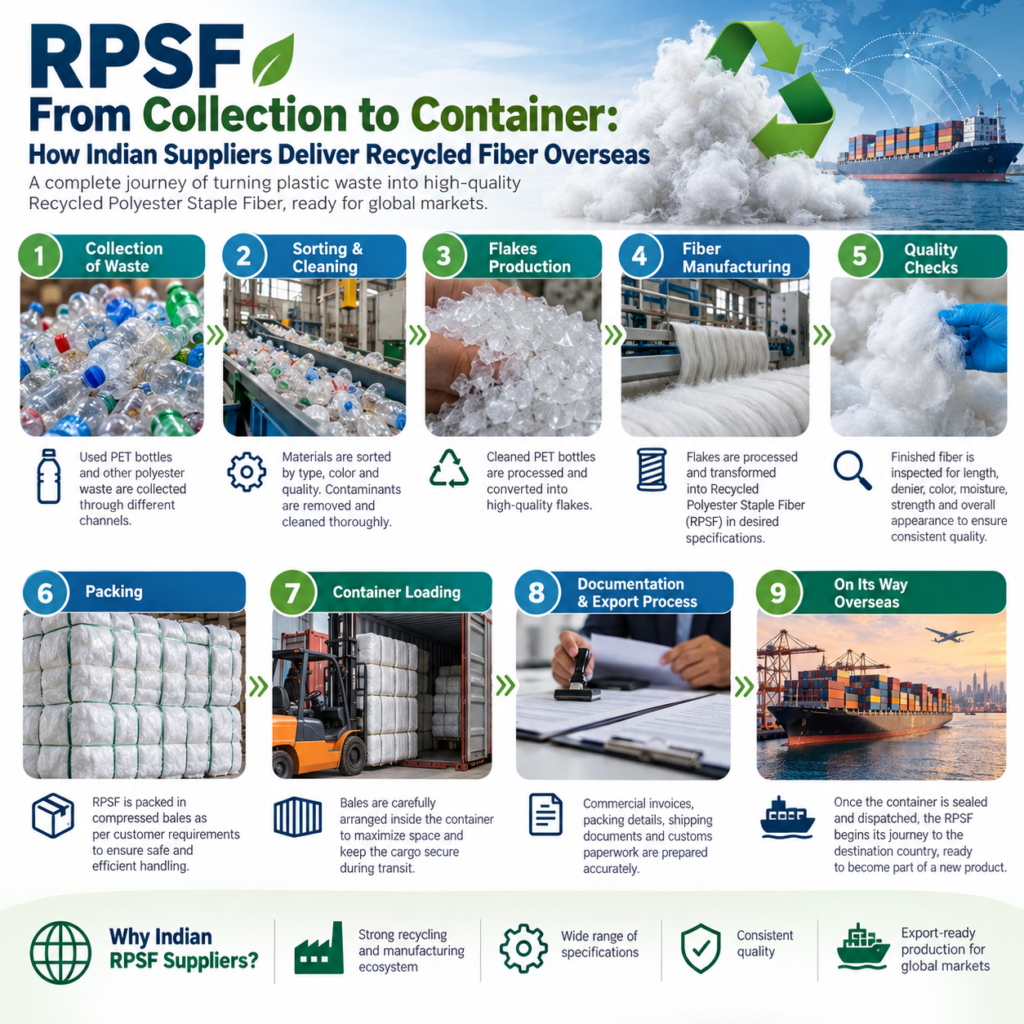
Step-by-Step Regenerated PSF Manufacturing Process
- Collection of PET Bottles
The first step is the collection of used PET bottles. These are already being collected by the recycling centres, the waste management centres, and collection programs. When employees sort the bottles, they remove, among others, non-PET plastics, metals, and other contaminants.
Sorting is important because the quality of the fibres will be affected by any contaminants.
- Sorting and Cleaning
After the bottles have been collected, they will go through the collection and sorting processes again. This will wash away the contaminants in the collection, remove the labels and caps, and remove the adhesives and, of course, the dirt.
This step ensures that only clean PET materials will be sent to the next step.
- Shredding Into PET Flakes
The next step is to feed the bottles into shredding machines, at which point the machines will be able to cut them into small pieces known as PET flakes. These flakes are then washed and dried to increase the purity of the flakes, as well as the consistency of the flakes.
In order to be able to make strong and uniform polyester fibres, the PET flakes have to be of high quality.
- Melting and Extrusion
At this step, manufacturers melt the PET flakes and then filter them to remove remaining impurities. Next, the molten plastic is forced through a device called a spinneret, which contains small holes.
When the molten polymer comes out of the holes, it is transformed into continuous polyester filaments.
- Fibre Formation and Cooling
Filaments that have been extruded are then solidified using a cooling system, which can be either air or water. After this, the filaments are then stretched and aligned to improve the strength and durability of the fibre. This process is called drawing, and it helps achieve the desired fibre properties for various applications.
- Crimping and Cutting
Then, the filaments are crimped, which provides them with a textured look. This increased texture helps to add bulk and improve the bonding of the fibres for use in textiles and non-woven applications.
Subsequent to the crimping step, the fibres are then cut into short lengths to form polyester staple fibres. Generally, these lengths will range from 32 to 64 mm, depending on the intended application.
- Packaging and Distribution
The final regenerated PSF is compressed into bales and arranged for transport. The fibres are sent to industries such as textile manufacturing, filling materials, automotive interiors, and home furnishings.
Advantages of Recycled PSF
The environmental and economic advantages of regenerated PSF have contributed to its growing popularity.
The main benefits of regenerated PSF include:
- Decreases plastic waste and the pollution of landfills
- Provides a lower carbon footprint than virgin polyester
- Conserves energy and essential raw materials
- Offers a strong and versatile fiber for various industries
- Contributes to the circular economy.
As a result of these advantages, an increasing number of manufacturers and brands are shifting toward recycled polyester fibers.
Uses for Recycled Polyester Staple Fiber
The versatility of Recycled PSF results in its broad application in many different industries, for instance, its strength, flexibility, and sustainability.
Some of the most common uses include:
- Production of yarns for textiles
- Production of non-woven textiles
- Filling and thermal insulation of automobile seats
- Production of pillows, cushions, and mattresses
- Production of carpets and other home furnishing textiles
The ability of Recycled PSF to replicate the performance of virgin polyester assures its reliability as a source material for both industrial and consumer applications.
Also Read: Global Demand and Market Trends for PET Flakes: Growth, Opportunities & Future Outlook
Conclusion
The Regenerated PSF manufacturing process demonstrates how PET bottle recycling technologies can be used to create valuable resources from plastic waste. Manufacturers transform plastic waste to meet the growing demand for sustainable materials while reducing environmental pollution.
As businesses implement more eco-friendly practices, the importance of regenerated PSF for the sustainable textiles and manufacturing sector will continue to grow.