As industries move toward sustainable materials, recycled PET (rPET) chips have become an important raw material in fibre, film, and bottle manufacturing. They work equally well as virgin PET but with very minimal environmental concerns. The use of rPET chips has become prevalent in the textile industry, packaging firms, and beverage companies. The above discussion highlights the features of the best rPET chips in use, their applications in different fields, and the reason behind their impact on the future of the manufacturing sector.
What Are rPET Chips?
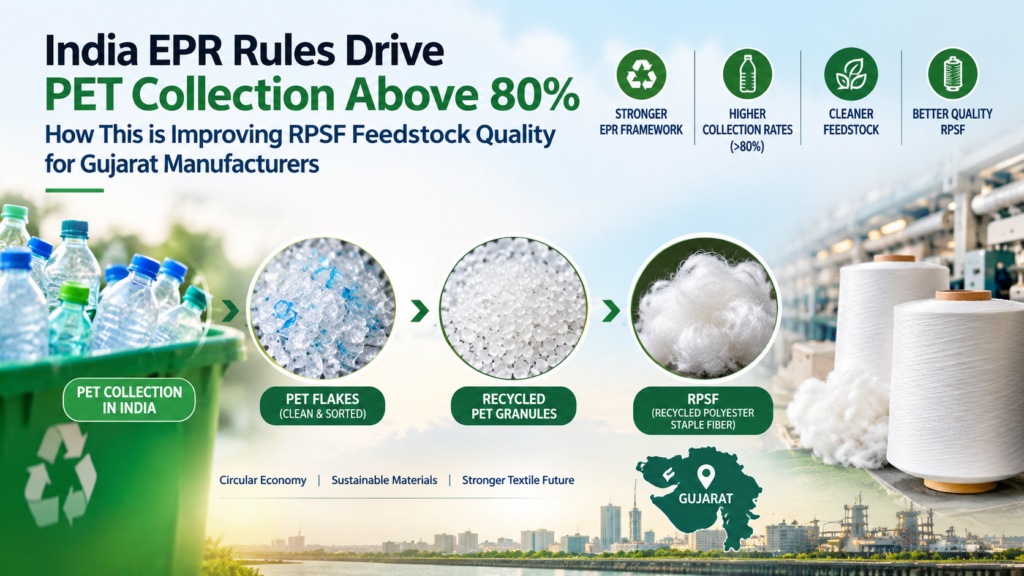
rPET chips are plastic pellets produced by recycling post-consumer PET bottles and industrial PET waste. The recycling procedure entails sorting, cleaning, decontamination, extrusion, and pelletizing. The recycled PET chips with good properties are of very good quality and thus suitable for use in difficult-to-process applications like spinning of fibres, extruded films, and containers.
Key Qualities of the Best rPET Chips
Not all rPET chips are the same. The best rPET chips for industrial use are defined by:
- High intrinsic viscosity (IV) for strength and durability
- Low contamination and moisture levels
- Consistent pellet size and colour
- Compliance with food-contact and quality standards
These factors ensure smooth processing and reliable end-product performance.
rPET Chips in Fibre Manufacturing
In textile industry applications, rPET chips find numerous applications in the production of recycled polyester fibres, such as staple and filament yarns. High IV rPET chips also possess superior tensile strength and find application in:
- Apparel and activewear
- Home textiles – carpets and upholstery
- Automotive interiors and nonwoven fabrics
Fibre-grade rPET chips enable brands to cut carbon footprints without compromising quality, durability, or comfort levels in fabrics.
rPET Chips in Film Manufacturing
Film-grade rPET chips are used to manufacture:
- Packaging films
- Sheets and thermoformed trays
- Industrial and protective films
These chips provide good clarity, strength, and barrier properties. Using rPET chips in film manufacturing reduces reliance on virgin plastics and supports sustainable packaging efforts. Many brands now include recycled content in films to meet regulations and consumer expectations.
rPET Chips in Bottle Manufacturing
Bottle-quality rPET chips are manufactured using sophisticated decontamination technology to conform to safe-food-quality standards. Bottle-quality rPET chips can be used in:
- Beverage bottles
- Food containers
- Personal care packaging
High-quality bottle-grade rPET chips allow for bottle-to-bottle recycling. This is an important part of recycling systems. They help lessen plastic waste and greenhouse gas emissions while keeping transparency and strength.
Environmental Benefits of Using rPET Chips
Using rPET chips instead of virgin PET provides several sustainability benefits:
- Lower energy use during production
- Reduced greenhouse gas emissions
- Less plastic waste in landfills and oceans
- Conservation of fossil fuel resources
These advantages make rPET chips important for companies seeking to meet ESG goals and sustainability targets.
Why Industries Prefer rPET Chips
They are preferred by manufacturers because they come with the following benefits:
- Cost stability relative to oil-based virgin PET
- Complying with EPR and Recycled Content Regulations
- Brand image and environmental credibility
With advances in recycling technology, quality in rPET chips is consistent across application types.
Also Read: Impact of Recycled Polyester on Carbon Footprint Reduction
The best rPET chips are essential in making fibre, film, and bottles because they combine performance, safety, and sustainability. As industries shift to circular production models, rPET chips will keep replacing virgin PET in various applications. Selecting high-quality rPET chips is not only an environmental choice; it is also a smart strategy for future manufacturing.