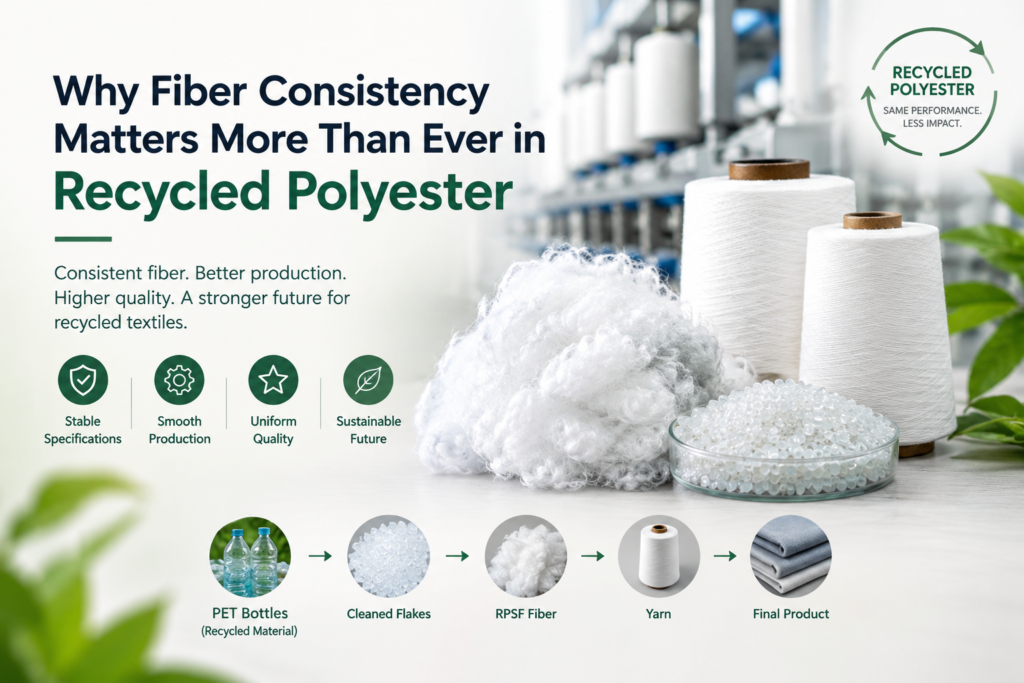
The global textile industry is constantly being forced to cut down on waste and start focusing on a circular economy. Among the most promising technologies that are inducing this shift is textile-to-textile recycling, particularly for polyester fibres, since polyester-based fibres make up a massive chunk of the global production of textiles.
What Is Textile-to-Textile Recycling?
Textile-to-textile recycling refers to the recycling of used/waste textiles to produce a new strand of fibres which can be converted into a new fabric. Unlike traditional recycling, which often downgrades textiles into insulation or filling materials, textile-to-textile recycling aims to retain fibre quality and enable repeated reuse within the textile industry.
This can be achieved through mechanical or chemical recycling techniques for polyester fibres, where old fabrics are recycled and reused as raw materials.
Why Polyester Fibres Need Circular Recycling
Polyester is strong, versatile, and affordable; however, it is a petroleum-based product that is non-biodegradable. Tens of millions of tonnes of polyester garments go to landfills or incinerators annually.
Textile-to-textile recycling helps to handle these challenges by:
- Textile waste reduction
- Reducing the dependency on virgin polyester
- Reduce carbon emissions and energy use.
- Supporting world sustainability goals
It requires no pre-processing or semantic attachments on the input data.
How Textile-to-Textile Recycling Works
The two main approaches used in polyester fibre recycling are:
1. Mechanical Recycling
This technique sorts, cleans, shreds, and melts polyester textiles into fibres. Mechanical recycling, though much cheaper, can weaken the fibres in multiple reprocessing, thus requiring blending with virgin polyester.
2. Chemical Recycling
Chemical recycling breaks down polyester into its original monomers. These again are repolymerized into new high-quality polyester fibres that perform like virgin material. This method is key to true textile-to-textile circularity.
Benefits of Textile-to-Textile Recycling in Polyester
“Textile-to-textile recycling has many benefits throughout the chain:”
Environmental Advantages
- 50 to 70% lower carbon footprint versus traditional polyester
- Less landfill and ocean pollution
- Reduced water and energy use
Economic Benefits
- Stable source of recycled raw materials
- Dependence on volatile fuel market prices has reduced.
- New Business Opportunities in Recycling Infrastructure
Brand and Consumer Benefits
- Supports commitment to sustainable fashion
- Supporting the fast-growing demand for eco-friendly textiles
- Increases credibility and trustworthiness
Challenges in Textile-to-Textile Recycling
- Mixed fibre textiles (polyester-cotton mixtures)
- Poor waste collection and sorting networks
- Higher costs for chemical recycling technology
However, innovations in AI-based sorting, enzyme recycling, and advanced depolymerization are rapidly addressing these barriers.
Is Textile-to-Textile Recycled Polyester as Good as Virgin Fibre?
Yes. Using modern technology, the quality of chemically recycled polyester fibres equals that of virgin polyester. This indicates that they are usable for higher-performing applications such as sportswear, clothing, and home textiles.
The Future of Closing the Loop in Polyester Fibres
Governments, as well as brands and companies, are investing heavily in closed-loop systems for textiles. The need for recycled content, influenced by consumer awareness, has increased textile-to-textile recycling.
As collection mechanisms continue to improve and advances in technology lead to scalability, the process of textile-to-textile recycling will look to become an increasingly mainstream option, effectively converting a linear polyester fibre material to a circular material.
Also Read: How rPET Chips Are Redefining Food Packaging Safety: Are They Safe for Food Use?
Textile-to-textile recycling holds the key to the loop-closing of polyester fibres. The processing of old textiles into new, high-quality materials means a drastic decrease in the environmental impact of the industry while satisfying the growing demand for sustainable fabrics.
For a truly circular textile future, polyester must be recycled back into polyester—and textile-to-textile recycling makes that possible.