Tag: rPET Bottle Industry

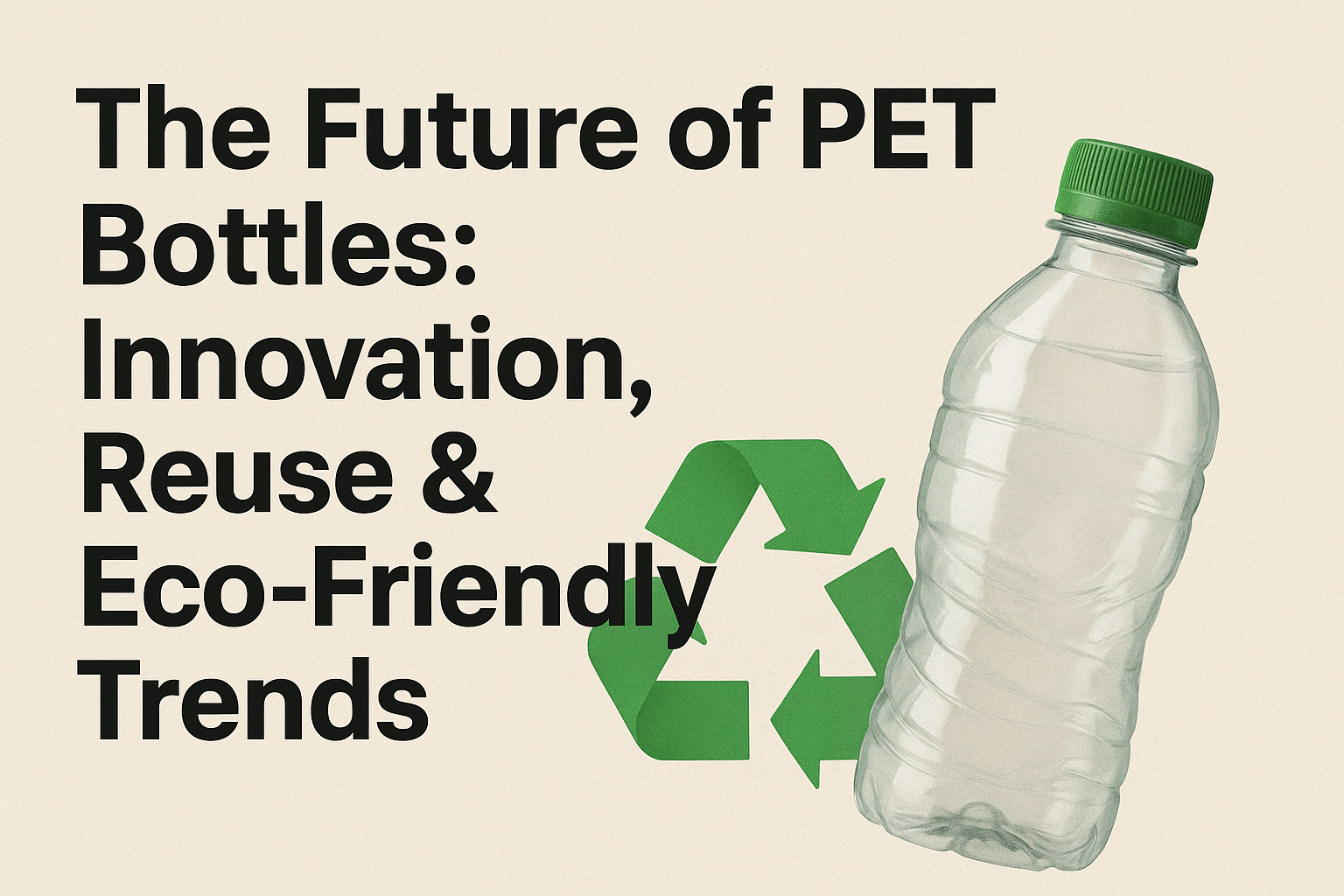
  • The Future of PET Bottles: Innovation, Reuse & Eco-Friendly Trends

    The Future of PET Bottles: Innovation, Reuse & Eco-Friendly Trends

    The global demand for sustainable packaging has rapidly surged, and PET bottles find themselves at the very core of this transformation. As industries gear up for eco-friendly materials, PET is becoming the preferred material of choice for its durability, recyclability, and cost-effectiveness. Today, PET bottles are no longer single-use packaging but essentially smart, reusable, and environmentally responsible solutions. Innovation and sustainability have thus finally come face to face in shaping the future of PET bottles.

    1. Growing Focus on Recyclability & Circular Economy

    The future of PET packaging lies in 100% recyclability and closed-loop systems. Manufacturers and recycling companies around the world are investing in technologies that turn used PET bottles into rPET, which can later be reused for new packaging.

    Key Trends:

    • More collection of post-consumer PET waste
    • Advanced sorting and washing technologies
    • Large-scale adoption of rPET in FMCG, beverages, cosmetics & pharmaceuticals
    • Government regulations supportive of including recycled content

    Through rPET, brands decrease their carbon footprint by saving energy, raw materials, and avoiding landfill space.

    2. Lightweight, High-Strength Designs for PET Bottles

    Lightweight bottle manufacturing is one of the major innovations shaping the PET industry. Though lighter in weight, these bottles have the same durability and strength.

    Benefits:

    • Lower cost of transportation
    • Reduced carbon emissions
    • Less consumption of raw material
    • Improved consumer convenience

    Lightweight PET bottles assist manufacturers in reaching sustainability goals without sacrificing quality.

    3. Smart & Connected PET Packaging

    As digitalization accelerates, even PET bottles are turning into smart packaging solutions. Brands add QR codes, NFC tags, and digital watermarks to improve traceability and engage with customers.

    Smart Packaging Features:

    • Authentication to avoid counterfeit products
    • Real-time product information
    • Improved track-and-trace during supply chain movement
    • Interactive consumer experiences

    This helps to build transparency and trust between brands and customers.

    4. Biobased PET: The Next Big Step in Green Packaging

    Biobased polyethylene terephthalate is being developed by researchers using renewable feedstocks such as sugarcane, corn, and organic waste. This reduces reliance on fossil fuels and provides a greener alternative to traditional PET.

    Advantages of Biobased PET:

    • Similar strength and clarity to conventional PET
    • Reduce carbon output.
    • Eco-friendly and renewable
    • Fully recyclable

    This could be the breakthrough to reshape the packaging industry over the coming years.

    5. Increase in Refillable PET Bottles’ Popularity

    Reusable PET bottles are gaining more and more momentum due to consumer preference for refillable and long-life packaging. Many brands launch refill stations for beverages, household cleaners, oils, and personal care products.

    Why Refillable PET Works:

    • Cost-effective for consumers
    • Reduces packaging waste
    • Encourages responsible consumption.
    • Extends PET lifecycle

    This shift supports global sustainability goals and reduces dependency on single-use plastics.

    6. Design Innovations for Better Sustainability

    New-generation PET bottle designs are all about greener performance. Companies are focusing on:

    • Single-material packaging allows easier recycling.
    • Labels and caps made of recyclable materials
    • Reduced color additives for improving material recovery
    • Sleeker shapes and ergonomic designs

    Such improvements make PET bottles more appealing while enhancing recyclability.

    Also Read: RPSF’s Role in Acoustic and Thermal Insulation Efficiency

    Conclusion

    The future of PET bottles revolves around innovation, eco-friendliness, and circular economy principles. From the integration of rPET to smart packaging and biobased materials, continuous evolution is transforming PET into one of the most sustainable packaging solutions. As global consumer awareness grows, industries increasingly adapt to using PET technologies that minimize environmental impact and facilitate a greener world. From humble containers, PET bottles are increasingly becoming ‘smart’, reusable, and ‘planet-friendly’ packaging solutions for the future.
  • Future Trends in the rPET Bottle Industry: What to Watch For

    Future Trends in the rPET Bottle Industry: What to Watch For

    The rPET bottle industry is leading the pack in innovation in the worldwide movement toward sustainability. Increasingly, more people are realizing the importance of environmental conservation and that there is an urgent need to reduce plastic waste, making rPET bottles the beacon of hope for a more sustainable future. Some trends have emerged that will shape the future of this industry.

    This article delves into some of the most important future trends in the rPET bottle industry, outlining what industry people, consumers, and even environmentalists should be looking out for.

    1. Increased Adoption of Circular Economy

    Arguably, one of the most important trends that dictate the rPET bottle industry is the adoption of circular economy. In a circular economy, materials such as plastic are reused, recycled, and repurposed; this way, waste and resources are reduced to a great extent.

    Legislation Driving Demand: Governments across the world are enacting laws to promote usage of recycled material. In fact, the European Union has committed to making 25% rPET a percentage of all plastic bottles as of 2025 and reaching 30% in 2030.

    Corporate Announcements: Major beverage and packaging companies have committed to putting 100% of recycled material in their bottles-a move aligned with both sustainable goals and consumer expectation

    2. Technology for Increasing Recycling Rate

    The rPET industry is witnessing rapid technological developments that enhance the efficiency and quality of recycling processes.

    Advancements in Sorting Technologies: New technologies, such as AI-powered sorting systems, allow for better separation of plastics, reducing contamination and increasing the yield of high-quality rPET.

    Chemical Recycling: Unlike traditional mechanical recycling, chemical recycling breaks down PET into its molecular components, allowing it to be recycled indefinitely without loss of quality. This innovation could revolutionize the production of food-grade rPET.

    Energy-Efficient Processes: New recycling methods are focusing on reducing the energy required, making the process more sustainable and cost-effective.

    3. Expansion of rPET Applications Beyond Bottles

    Though the bottle remains the main target for rPET, the material’s versatility is opening doors to a wider range of applications.

    Textile Industry: rPET is increasingly being used in the production of polyester fabrics for clothing, upholstery, and industrial applications.

    Food Packaging: The use of rPET in food containers and packaging is growing, thanks to advancements in making it safe for direct food contact.

    Automotive and Construction: Lightweight, strong, and sustainable, rPET is finding its applications in car interiors, insulation materials, and more.

    The diversification of rPET applications is building a more robust demand that is driving investment and innovation in the sector.

    4. Consumer Education and Awareness

    Educating consumers about the benefits of rPET and encouraging responsible recycling are critical to the growth of the industry.

    Labeling and Branding: Brands are labeling clearly how the rPET is used in products. That, in turn, brings consumers’ trust while educating people on recycling.

    Campaign for Recycling: The governments along with the companies come up with campaigns to teach consumers to recycle properly in order to ensure good quality of rPET.

    Transparency Initiatives: The fact that one needs to share the environmental effects of rPET vs. virgin PET, makes people realize the worth of the decision they are making in life.

    5. Innovative Bottle Design

    The rPET bottle design for the future is more focused on sustainability and functionality.

    Lightweight Bottles: This lightens the plastic content in bottles, saving money while increasing recyclability.

    Mono-Material Bottles: These use a single material for improved recyclability and less waste.

    Smart Packaging:  Technologies such as QR codes and embedded sensors in rPET bottles can give consumers an idea of the recycling process and even insights into a product’s sustainability journey.

    6. Regional Growth in Emerging Markets

    Emerging markets are slowly catching up with the developed markets, where rPET adoption is spearheaded.

    Asia-Pacific: Countries like India and China are investing significantly in recycling infrastructure, along with growing awareness about plastic pollution.

    Africa: International partnerships are assisting African countries in developing recycling economies and hence opening up the rPET market in underutilized geographies.

    Latin America: Governments in Latin America are encouraging rPET adoption by offering incentives and changing policy measures.
    The growth of rPET adoption in these regions will significantly increase global production and consumption.

    7. Greater Collaboration Along the Value Chain

    Scaling the rPET bottle industry requires collaboration along the value chain.

    Collaboration of Brands and Recyclers: Brands are aligning with recycling companies to obtain continuous high-quality rPET supply.

    Multi-Stakeholder Programmes: The Ellen MacArthur Foundation is mobilizing governments, businesses, and NGOs to transition faster toward a circular economy.

    Innovation Hubs: It represents collaboration platforms that enable players within the industry to pool together their resources and skills and spur innovation in rPET.

    8. Growing Consumers Demand for Sustainability

    Consumer preferences are the largest influencer of the rPET industry.

    Eco-conscious buying habits: Nielsen Report 73% of global consumers consider changing their consumption to make the environment a better place. This creates the need for rPET bottles


    Also Read: How to Incorporate RPSF into Your Textiles | Rakshitam Ecofibre


    Premium pricing for sustainability Many consumers are willing to pay extra for products produced out of recycled material.

    The future of the rPET bottle industry is bright, with advancements in technology, design, and consumer engagement driving its growth. By focusing on sustainability, collaboration, and innovation, the industry is poised to play a critical role in reducing plastic waste and creating a circular economy.