The growing concern about plastic waste has led to an increased need to find alternatives to plastic packaging. One such solution is offered by rPET bottles. These bottles are created by recycling used plastic bottles into reusable packaging. They play a crucial role in reducing environmental pollution.
In this blog post, we shall examine how rPET bottles are created and their importance in the recycling process.
What Are rPET Bottles?
The term rPET means Recycled Polyethylene Terephthalate, which refers to bottles made from recycled PET plastic. Rather than using new plastic from petroleum sources, the rPET manufacturing process begins with the recycling of used bottles and converting them to new bottles.
Also, rPET bottles are used for packaging beverages, food items, and personal care products because they are as strong, clear, and durable as new Polyethylene bottles.
Stage-by-Stage Explanation of the Manufacturing of rPET Bottles
There is an established process for both recycling and manufacturing for rPET bottles.
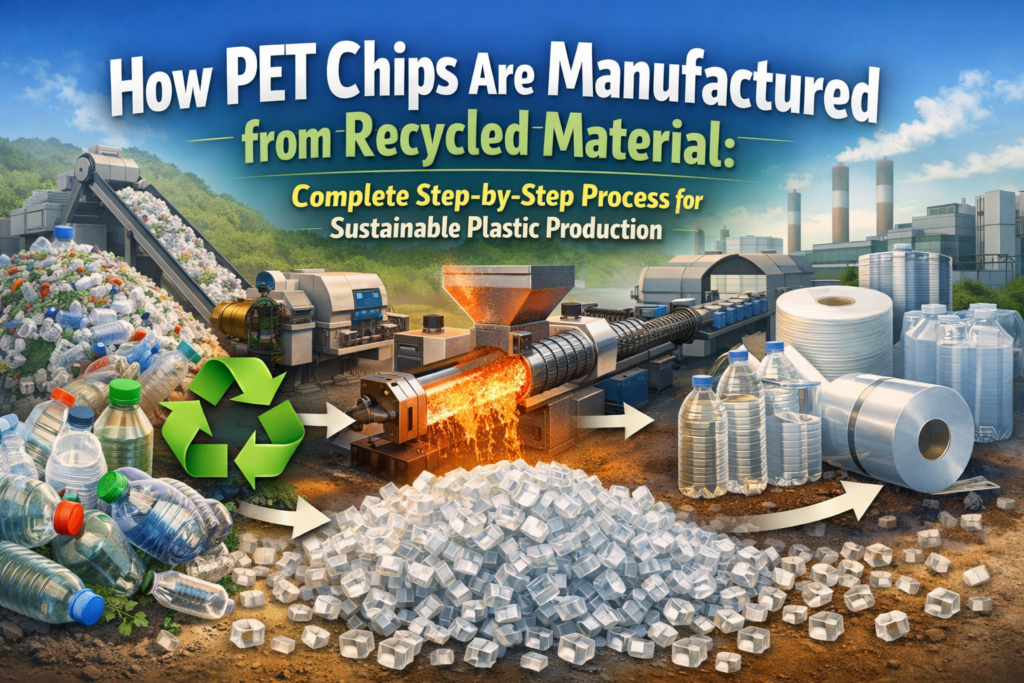
1. Collection of Discarded PET Bottles
The process begins with collecting used PET bottles from homes, recycling centers, and waste management systems. There are workers who separate the bottles based on the different types of plastics.
2. Sorting and Separation
The workers who sorted the bottles have them cleaned and sorted by colors and different types of materials. They extract non-PET components, removing caps, labels, etc., so that the desired material is of good quality.
3. Washing and Cleaning
The bottles that have already been sorted through are thoroughly cleaned and washed of the substances that are glued to the bottles and other impurities.
4. Shredding to Obtain PET Flakes
The bottles that are clean and sorted are processed through a machine that shreds them and produces small flakes of PET. These flakes are cleaned and dried to achieve homogeneity.
5. Melting and Pelletizing
The PET flakes are melted and made into small granules known as rPET chips or pellets. These pellets serve as the raw material for making new bottles.
6. Bottle Manufacturing
The rPET pellets are melted again and formed into preforms. These preforms are heated and blown into the shape of bottles using blow molding technology.
Why rPET Bottles Are Important for Plastic Recycling
- Reduces Plastic Waste: rPET bottles help reduce plastic waste by reusing existing materials instead of throwing them in landfills or oceans.
- Supports Circular Economy: Recycling PET bottles into new ones creates a closed-loop system, where materials are reused continuously. This approach reduces reliance on raw resources.
- Lowers Carbon Footprint: Making rPET bottles uses less energy than producing new plastic, leading to lower greenhouse gas emissions.
- Conserves Natural Resources: By cutting down the need for petroleum-based raw materials, rPET production helps preserve natural resources.
- Encourages Sustainable Packaging: Many large brands are choosing rPET bottles to achieve sustainability goals and lessen their environmental impact.
Applications of rPET Bottles
rPET bottles are widely used in various industries because of their reliability and eco-friendly characteristics.
- Beverage packaging (water, soft drinks, juices)
- Food packaging containers
- Personal care and cosmetic products
- Pharmaceutical packaging
Future of rPET Bottles
The demand for rPET bottles is rising as governments and organizations implement stricter recycling rules. Improvements in recycling technology are enhancing the quality of recycled plastic, making it more suitable for food-grade applications.
As awareness of sustainability grows, rPET bottles are likely to become a standard in packaging industries worldwide.
Also Read: Recycled Polyester Staple Fibre in Nonwoven Applications: Performance Comparison and Key Benefits
Conclusion
Learning how rPET bottles are made emphasizes the importance of recycling in reducing plastic pollution. By turning used PET bottles into new packaging materials, rPET supports sustainable manufacturing and protects the environment.
As industries continue to embrace eco-friendly solutions, rPET bottles will be essential for creating a cleaner and more sustainable future.