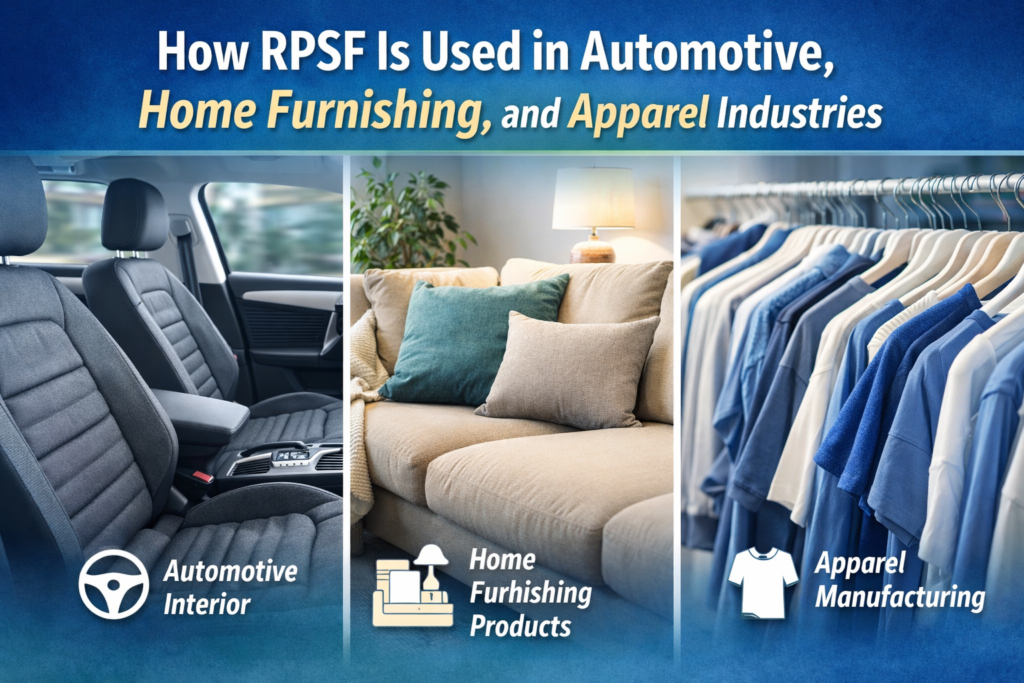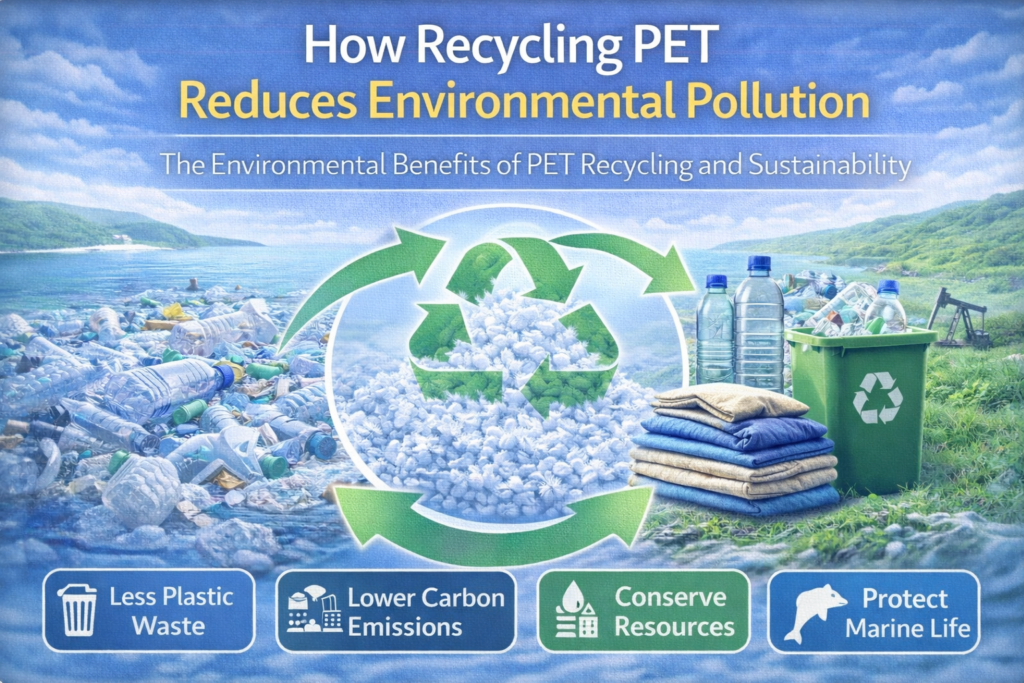
As sustainable development emerges as a prime focus for sectors globally, the importance of Recycled Polyester Staple Fibre (rPSF) is increasing rapidly. Made from recycled PET bottles and wastes, rPSF is non-toxic in nature and possesses the same functional qualities as virgin polyester. At present, rPSF is used by many manufacturing units in the automobile industry, home furnishings sector, and clothing industry.
What Is rPSF and Why Is It Important?
Recycled Polyester Staple Fibre (rPSF) is made by recycling post-consumer PET bottles into fibres used in textiles and industrial applications. Compared to virgin polyester, rPSF uses less energy, lowers carbon emissions, and keeps plastic waste out of landfills. Because of these benefits, rPSF is now a preferred material for manufacturers aiming for a circular economy.
Use of rPSF in the Automotive Industry
The automotive sector is one of the largest consumers of rPSF because of its durability, flexibility, and cost efficiency.
Key Automotive Applications:
- Seat upholstery and seat padding
- Roof liners and door panels
- Carpets and floor mats
- Trunk liners and insulation materials
rPSF provides excellent thermal insulation, sound absorption, and abrasion resistance, making it perfect for vehicle interiors. Leading automobile brands are increasingly replacing virgin fibres with rPSF to lower vehicle carbon footprints and meet global sustainability regulations.
Use of rPSF in Home Furnishing Products
In the home furnishing industry, rPSF has become a popular choice due to its softness, resilience, and long-lasting performance.
Common Home Furnishing Applications:
- Sofa and cushion filling
- Mattresses and pillows
- Carpets and rugs
- Curtains, blankets, and quilts
rPSF offers high loft, moisture resistance, and shape retention, which ensures comfort and durability. Its hypoallergenic properties make it suitable for bedding products, while its affordability allows manufacturers to offer eco-friendly products at competitive prices.
Application of rPSF in the Clothing Sector
The fashion industry is under intense pressure to use sustainable materials. rPSF has an important role to play in this respect.
Clothing Applications Include:
- Sportswear and activewear
- Jackets & winter clothing insulation
- T-shirts, shirts, and blended fabrics
- Work clothes and uniforms
rPSF fibers can also be blended together with cotton or other fibers to enhance strength, wrinkle resistance, and moisture management capabilities. Some of the popular fashion brands around the world have started using rPSF in producing recycled polyester fabric.
Benefits of Using rPSF Across Industries
The growing use of rPSF comes with several key advantages:
- Lower carbon footprint than virgin polyester
- Reduced plastic waste and landfill pollution
- Comparable strength and durability to virgin fibres
- Cost-effective and scalable production
- Compliance with global sustainability standards
These benefits make rPSF a material ready for the future across sectors.
Future Outlook of rPSF Usage
With stricter environmental rules and increased consumer awareness, the demand for rPSF is expected to rise steadily. Automotive OEMs, furniture manufacturers, and apparel brands are investing heavily in recycled materials to reach ESG goals and sustainability certifications.
As recycling technologies improve, rPSF quality continues to match and, in some cases, surpass traditional polyester, making it a key part of sustainable manufacturing.
Also Read: Why Brands Are Shifting to Recycled Polyester Staple Fibre
From vehicle interiors to comfortable home furnishings and eco-friendly apparel, rPSF is changing multiple industries. Its ability to deliver performance, durability, and sustainability makes it an essential material in the global shift toward a circular economy.