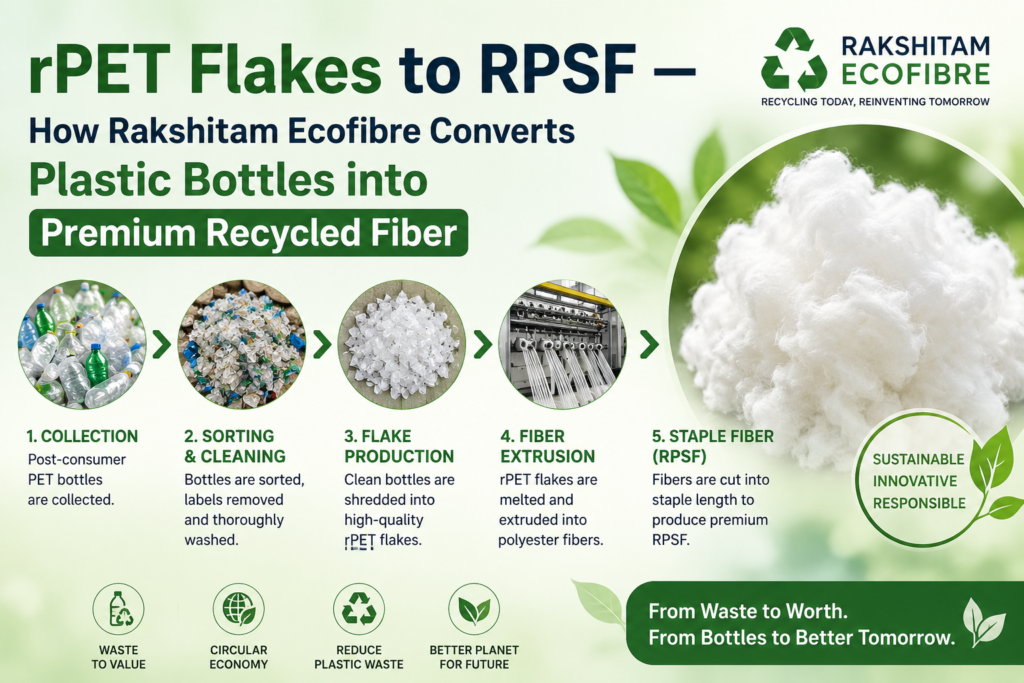
Recycled polyester staple fiber (RPSF) is made from recycled polyester feedstocks, usually beginning with discarded PET bottles. But in today’s recycled textile market, recycled bottles aren’t enough anymore. Buyers want to learn more and more about where the material came from, how it was processed and if the recycled claim can be verified.
This is where Chain of Custody (CoC) becomes crucial.
Chain of Custody is the system that tracks recycled material as it moves through the different stages of the supply chain. Textile Exchange defines chain of custody as a system to ensure that claims such as “recycled” hold true all the way through the material’s journey.
For RPSF producers this means establishing a dependable connection between the original PET waste and the final recycled fiber.
What is Chain of Custody in RPSF?
Simply put, Chain of Custody is the answer to one big question:
But how do we prove that the recycled material in the finished RPSF really came from the recycled source claimed?
A typical supply chain for RPSF has a number of stages:
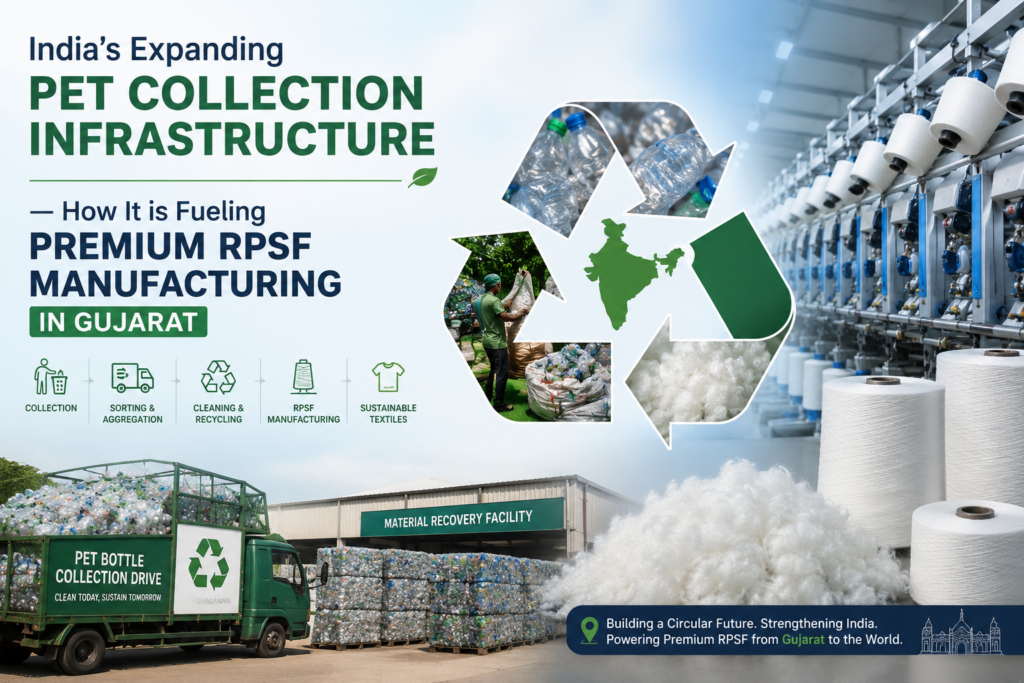
PET Bottle Collection →Sorting & Aggregation →PET Flakes →Recycling →RPSF →Yarn/Fabric →End Product
At all stages, material quantities, documentation, transactions and processing activities must be traceable.
Standards like the Global Recycled Standard (GRS) and Recycled Claim Standard (RCS) use chain-of-custody requirements to track recycled materials throughout the supply chain.
Why Tracing the Bottle Level is Important
Suppose every day a recycling plant receives thousands of PET bottles. Those bottles might come from different collection networks and different places before they are sorted and processed.
Without proper documentation, it is difficult to demonstrate how much recycled material entered the system and how much finally became certified RPSF.
There is a strong Chain of Custody system linking incoming material records to production records and outgoing sales records. This will give more confidence to textile mills, yarn producers, brands and international buyers.
Verification at each step
The Chain of Custody is not exclusive to the RPSF manufacturing plant.
The large-scale certified supply chain can comprise collectors, concentrators, recyclers, fiber manufacturers, yarn producers, fabric manufacturers and other companies engaged in processing or trading the material.
Textile Exchange says its Content Claim Standard requires certification all the way down the supply chain, with audits, document reviews and transaction certificates as the backbone.
For an RPSF manufacturer, this can be the number one reason to track accurate records for:
- Inputs of recycled PET
- Material quantities and batch sizes
- Production and processing record
- Inventory balances:
- Dispatch documentation and sales
- Supplier–customer transactions
- Proof of certification
The goal is to make sure that the recycled material claim is consistent from input to output.
Why Chain of Custody Matters More in 2026
“Expectations around traceability are becoming more sophisticated across the recycled textiles industry.
Textile Exchange has launched eTrackit, an electronic traceability system to provide product level traceability of certified materials and transactions.
There are also key standard updates in 2026. On July 1, 2026, Textile Exchange released GRS Version 5.0 and RCS Version 3.0 updates to improve tracking of reclaimed material. Starting December 31, 2026, the new Reclaimed Material Declaration Form will be required for GRS and RCS certifications.
This way is clearly leading the recycled fiber industry forward: improved documentation, more robust verification and more transparent supply chains.
Advantages for RPSF Producers
There are many business reasons to have a reliable Chain of Custody system.
It increases buyer confidence first. International customers have greater assurance that documentation supports recycled-content claims.
Second, it helps you with certification and compliance. GRS and RCS are third-party certification systems that verify recycled input and chain of custody.
Thirdly, it improves the internal management of materials. Accurate records on inputs, production and inventories can help manufacturers to identify discrepancies and manage recycled feedstock better.
Finally, strong traceability can be a competitive advantage when supplying brands and textile manufacturers with strict sustainability requirements.
RPSF Verified From Recycled Bottle
The future of recycled polyester is about more than just making fiber out of waste. It’s about showing that journey that is behind that fiber.
Chain of Custody is the framework of documentation and verification that links recycled PET waste to the final fiber for RPSF producers. Traceability will be an increasingly important part of responsible recycled polyester manufacturing as global buyers increasingly demand credible sustainability claims.
In 2026, “recycled” is no longer just a material descriptor, it’s a claim that demands proof. A clear Chain of Custody helps ensure that every step from bottle collection to finished RPSF can withstand scrutiny.